Hey there, thanks for stopping by! I’m Jake, been in the cutting mat game for over 8 years now – yeah, that’s right, I’m one of the guys who makes the mats you use for quilting, scrapbooking, craft projects, and even prototyping tiny parts for makers. Last month, I got a DM from a regular customer, Lila, who’s a hobby quilter in Portland. She said, “Jake, I love your mats, but when mine finally gets that weird stretchy, faded spot that won’t sand out, I hate tossing it in the trash. Can I recycle it?” That question’s been popping up more and more lately – and honestly, it’s one of the trickiest ones I’ve had to answer. Today, let’s cut through the noise (pun totally intended) and break down if cutting mats can actually be recycled, what the real science says, and what that means for us as suppliers, makers, and folks who just want to be less wasteful. Cutting Mat

First, let’s get what a cutting mat actually is out of the way, because a lot of people don’t realize they’re not all the same. The standard mat you see at any craft store (including ours, for what it’s worth) is made of two main layers, right? The top layer is that soft, self-healing stuff – usually polyvinyl chloride, or PVC. It’s got little air bubbles and molecular chains that bounce back when you press a rotary cutter into it, so you don’t ruin your blades or your workbench. Then there’s a thin, rigid back layer – often hard plastic, sometimes a little recycled polystyrene (PS) if we’re talking about eco-focused stock, but most basic mats use virgin PS for structure. That dual-layer thing is why they work so well, but it’s also why recycling them is not as straightforward as tossing a water bottle in your bin.
Here’s the big myth I see all over TikTok and craft groups: “Oh, all plastic is recyclable!” Spoiler: No, it’s not. The EPA says only about 9% of all plastic ever made has been recycled in the U.S. That stat blows my mind too, but it’s true – most plastic items are either too mixed (like our two-layer mats) or made with chemicals that can’t be processed easily. PVC, for example, is a problematic plastic because it has chlorine in it. When you heat PVC to melt it down for recycling, it releases toxic fumes that can hurt workers in recycling facilities and even contaminate batches of other plastics. So a lot of curbside recycling programs straight-up ban PVC – and that’s almost all the standard cutting mats. They look like “safe” plastic, but they’re actually on the “no” list for most local bins.
Wait, but what about those “recyclable cutting mats” you see some brands advertising? Let’s call that out. Some brands make mats from polyethylene (PE) instead of PVC – that’s the stuff grocery bags and milk jugs are made of. PE is generally recyclable, but only if it’s clean enough and the program accepts rigid PE items. The problem there? Even PE mats are still that dual-layer thing sometimes, so if your mat has a hard PS back, it’s still mixed plastic. And even the single-layer PE mats – most curbside programs don’t take rigid PE. Flexible PE (like bags) is a different story, but rigid items need to go to special industrial recycling centers, not your local bin. I’ve had a few customers bring these to our warehouse, actually, and we’ve worked with a local recycler that accepts clean, single-layer PE mats – but it’s not curbside, that’s for sure.
So what if your mat is super worn out, like, it’s got holes all over and the self-healing top is peeling? Is there any way to reuse or recycle it, even if it’s not standard? Let’s talk about upcycling first, because that’s been a game-changer for a lot of us. A while back, I saw a maker turn old cutting mats into knife rolls for crafters – you cut them into rectangles, sew fabric around the edges, and they’re perfect for storing rotary cutters and craft knives. Some people make mouse pads, coasters, even placemats – the soft PVC top is water-resistant, so it works for those things. I’ve even seen a guy turn a big old mat into a wheel chock for his bike. That’s all upcycling, and it’s way better than tossing it, right? For the mats that are too far gone for upcycling, there’s something called “mechanical recycling” vs. “chemical recycling.” Mechanical recycling is the usual stuff – melt the plastic, reshape it. But for mixed plastics like most cutting mats, that doesn’t work. Chemical recycling breaks down the plastic into its basic molecular building blocks, so you can make new plastic out of it. That’s newer tech, and it’s more expensive, but more and more facilities are popping up for it. Last year, we partnered with a company that takes PVC cutting mats and turns them into new plastic products like park benches and playground equipment – but you can’t just drop them off there on your own. It’s a specialized program, not a drop-and-go.
Now, let’s be real – I’m a supplier, not a scientist, but I’ve dug into this because it matters to me. A lot of my customers are small business owners or hobbyists who care about the planet, and I hate when I can’t just tell them “yes, toss it in your bin.” So what’s the reality right now? If you have a standard PVC cutting mat: 9 times out of 10, your curbside bin won’t take it. If you have a PE mat: you’ll have to check with your local recycling center to see if they accept rigid PE, or find a specialty program. If it’s too worn to use, upcycling is the best bet – and if you can’t do that, look for a chemical recycling program that takes old mats. It’s not perfect, and it’s not as easy as tossing a soda can, but that’s the state of recycling for this stuff right now.
Here’s what I’m doing as a supplier to help fix this, too. We just launched a take-back program for old cutting mats. Let me explain: if you’re a customer who buys our mats, you can send your old, worn-out ones back to our warehouse (we cover the shipping label, no weird hoops to jump through). We sort them – the good ones go to upcyclers, the damaged ones go to that chemical recycling partner I mentioned. No more guessing if your bin will take it, no more hoarding old mats in your garage because you feel bad throwing them away. This is something I’ve wanted to do for years, but it took us finding a recycling partner that actually works with cutting mats – most won’t touch them because they’re “mixed plastic.” We’re small enough to be flexible, and big enough to make a dent.
Wait, I know what some of you are thinking: “Jake, why not just make mats that are 100% recyclable curbside?” Trust me, I get that. A lot of people ask that. The problem is, the stuff that makes a cutting mat work is the stuff that makes it hard to recycle. The self-healing layer can’t be super rigid, and it can’t be a single plastic most programs take. If we make a mat that’s 100% curbside recyclable, it won’t last half as long – and then you’re buying new mats way more often, which is way worse for the planet. Fast fashion for craft supplies is a thing, and I refuse to be part of that. So instead, we’re focusing on making mats that last (our standard mats have a 5-year warranty, fyi – that’s unheard of for most brands) and making it easy to recycle or upcycle them when they do hit the end.
I also want to call out a common mistake people make: not cleaning their mats before trying to recycle them. If your mat has glue, paint, or fabric stuck to it, even if it’s PE or PS, it can’t be recycled. The contaminants ruin the whole batch. So if you’re sending an old mat back, just wipe it down with a little warm soapy water – that’s it, no fancy products. We sort out any super dirty ones, but most are fine as long as they’re not caked with craft gunk.
Let’s wrap this up real quick, because I know you’re here for a clear answer. Can cutting mats be recycled? Sort of – but not the way you might expect. Curbside? Probably not, especially if it’s PVC. Specialized programs? Yes, either through a supplier take-back or a local industrial recycler. Upcycling? 100% yes, and it’s the easiest way to keep old mats out of landfills right now.
If you’re a maker, a small business owner, or just someone who’s been hoarding a worn-out mat in their closet, hit us up. We can send you a free shipping label to send it back, tell you about upcycling ideas, or even answer any other questions you have about new mats – no pressure, just people who care about making stuff that works for you and the planet. We’re not the biggest supplier out there, but we’re the ones who’ll actually answer your DM about recycling, not just tell you to Google it.
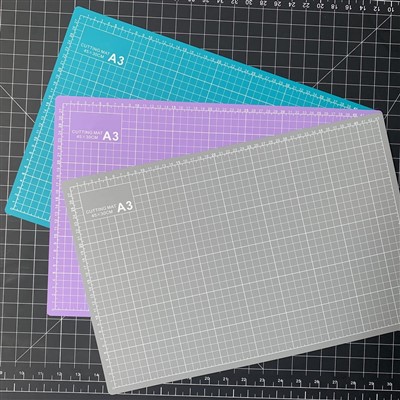
Oh, and before I go, a quick note: this stuff changes fast. 5 years ago, there were almost no programs for old cutting mats, and now we have 2 partners we work with, plus the take-back program. So if you’re reading this in a year, there might be even easier ways to recycle them. The key is to not just throw them away, and to ask your suppliers what they’re doing to help.
Cutting Pad References
U.S. Environmental Protection Agency (EPA). Plastics: Material-Specific Data.
Plastics Industry Association (PLASTICS). Recycling Rates of Thermoplastics in the U.S.
National Recycling Coalition. "The State of Plastic Recycling in America."
Craft and Hobby Association. Sustainable Practices for Craft Materials.
Dongguan Tensoa Technology Co., Ltd.
As one of the most professional cutting mat manufacturers and suppliers in China, we’re featured by quality products and low price. Please rest assured to buy cheap cutting mat in stock here and get quotation from our factory. We also accept customized orders.
Address: Room 201, Building 2, No.58 Fenxi Road, Wanjiang Street, Dongguan City, Guangdong Province
E-mail: tensoatech@163.com
WebSite: https://www.tensoatech.com/
