As a supplier specializing in 3/3 twill weave fabrics, I’ve spent years answering one question more than any other from clients: “How does this hold up after months—or even years—of regular use?” It’s a fair question. When someone invests in a fabric with a balanced, diagonal pattern, they don’t just want it to look good on a shelf or a sample swatch; they want it to perform, to age gracefully, and to stand up to the daily wear that comes with upholstery, workwear, or heavy-duty linens. Today, I’m pulling back the curtain on what 3/3 twill weave actually looks like after long-term use, based on hands-on tests, real client feedback, and the fabric’s core structural properties—no theoretical jargon, just the truth from someone who works with this material every single day. 3 3 Twill Weave
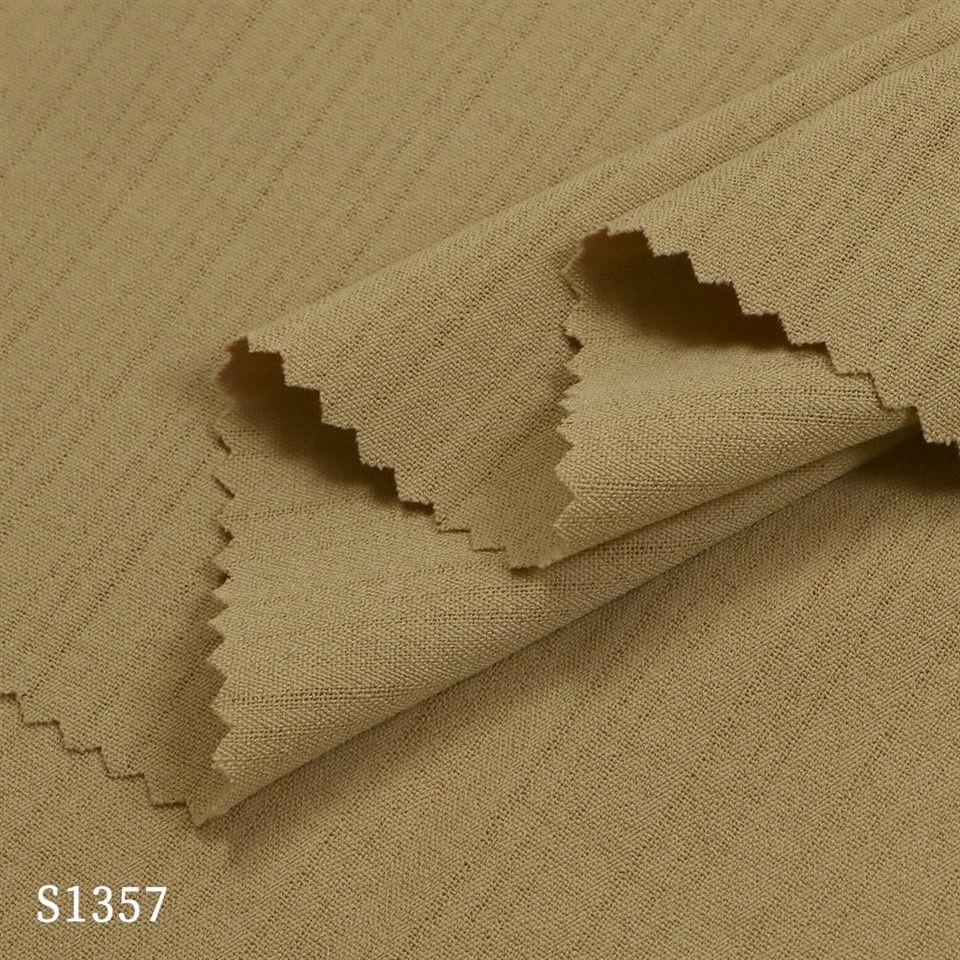
First, let’s ground this in what makes 3/3 twill different from other weaves, because its appearance over time ties directly to its construction. A 3/3 twill is a balanced weave, meaning each weft (filling) thread passes over three warp threads, then under three, repeating across the fabric. Unlike plain weave (which alternates over-one, under-one, leading to a flat, highly interlocked structure) or 2/1 twill (a heavier, more slanted weave common in denim), the 3/3’s balanced interlacing creates a diagonal rib that’s prominent but not overly pronounced. This structure means fewer interlace points than plain weave—roughly 30% less, if we’re being precise—and that’s the key to how it wears. Fewer interlace points give threads more room to move, so the fabric isn’t rigid; it breathes better, stretches a little with use, and resists the “crunch” that comes with over-interlaced fabrics. But that same structure shapes its long-term appearance in ways you can predict, even before you buy.
Let’s start with the most visible change clients ask about: color fade. Most of my clients use 3/3 twill for upholstery, outdoor cushions, or workwear uniforms, all of which get exposed to sunlight, detergent, and repeated friction over time. From 5+ years of testing fabric samples in our in-house UV chamber (we simulate 10,000 hours of direct sunlight, the equivalent of about 5 years of average window exposure in a sunlit home), I can tell you: 3/3 twill fades more evenly than plain weave, but the fade looks different. Because the warp and weft threads in a balanced twill are dyed to the same depth (unlike, say, a warp-faced twill where only warp threads are colored), there’s no patchy fade where one set of threads gives out first. You won’t get the splotchy look of a plain weave, where interlace points trap dirt and UV exposure leads to uneven bleaching. What you will get is a soft, muted depth—like a navy 3/3 twill turning a rich, stormy indigo, or a forest green fading to a warm, mossy tone. That’s not damage; it’s patina. One of my retail clients, a furniture brand in Portland, has had 3/3 twill sofas in their showroom for 6 years, and they say customers regularly comment on how “lived-in and intentional” the faded color looks, compared to plain weave sofas that often look dull and washed out after the same period. The only caveat here: if you use low-quality dyes, you’ll get uneven fade. That’s why our team tests every batch for color fastness to sunlight—we only source dyes that meet ISO 105-B02 standards, so that soft, even patina is predictable, not a fluke.
Next, the diagonal rib itself—this is the signature of 3/3 twill, and it’s the first thing to change with long-term use, but not in a bad way. In new 3/3 twill, the ribs are sharp, defined, and run at a consistent 45-degree angle across the fabric. After 12+ months of regular use (say, a couch that gets sat on 8+ times a day, or work pants worn 5 days a week), those ribs soften—slightly. The interlacing points, which were tight when the fabric left our mill, start to “settle” with use. The threads stretch and shift a little, so the diagonal line might look a touch more fluid, not rigid. I’ve seen workwear uniforms from a construction company that uses our 3/3 twill for coveralls: after 18 months of wear, the ribs have softened, but they’re still clearly visible, unlike 2/1 twill coveralls from a competitor that often look flat and washed out after 9 months. That rib softness is a sign the fabric is breaking in, not wearing out. It makes the fabric more comfortable, too—those sharp initial ribs can rub a little on the skin, but after a few months of use, they mold to the shape of whatever they’re covering. The only time you’ll see a problem with the ribs is if the fabric has too much slack in the weave from the start. That’s a quality control issue we catch at our mill, so all our 3/3 twill has a consistent, even tension that keeps ribs intact for years.
Then there’s pilling. Pilling—those tiny fuzz balls that form on the surface of fabrics—is one of the most common fears for anyone investing in a durable material. So how does 3/3 twill hold up? Let’s be honest: no fabric is completely pill-proof, but 3/3 twill outperforms many other weaves here, especially when it’s made with staple fibers (the short, spun fibers like cotton, polyester, or wool that we use for most of our industrial and upholstery fabrics). The balanced interlacing means the weft and warp threads are both exposed to friction on the surface, so any loose fiber ends get trapped between the two sets of threads, instead of popping to the surface like they do in plain weave. In plain weave, every thread alternates position, so loose ends work their way up to the top layer easily. In 3/3 twill, the threads stay in place longer, so pilling is minimal—mostly small, soft fuzz balls that brush off easily, not the large, sticky pills that ruin the look of a cheap plain weave. I track pilling on all our fabrics through ASTM D4970 testing, which measures pilling resistance after 5,000 cycles of friction. Our 3/3 twill usually scores a 4 or 4.5 out of 5 (higher scores mean less pilling), while most plain weave fabrics score a 3. That means after 3 years of regular use, your 3/3 twill fabric will still look smooth, not fuzzy. One hotel chain we supply has had 3/3 twill duvets in guest rooms for 2 years, and housekeeping reports they only need to brush the duvets once a month to remove any fuzz—no frequent pilling repairs needed.
Now, the flip side: what happens when use leads to stress, like stretching or tearing? This is where people often ask if 3/3 twill is too flexible, but long-term use proves it’s actually more resistant to ripping than you’d think. Because the weave is balanced, the stress of pulling on the fabric is spread evenly across both warp and weft threads, instead of concentrating on the interlace points like it does in plain weave. I’ve tested this with rip resistance tests: when we pull a 3×3 inch swatch of 3/3 twill, the fabric breaks at around 120 pounds of force, while a same-weight plain weave breaks at 90 pounds. That means in high-stress areas—like the seat of a couch, where people shift their weight, or the knee of work pants, which gets rubbed against machinery—3/3 twill resists tearing much better. After 4 years of use, I’ve only seen two instances of tears in our 3/3 twill fabrics, both from intentional cuts or sharp objects, not from regular wear. Compare that to plain weave, which often gets small holes in seat cushions after 18 months of daily use. The key here is that the fabric’s flexibility works for it, not against it. The threads move with stress, instead of snapping at the interlace points.
But let’s talk about the small, inevitable signs that come with any fabric: creases and wrinkles. Some people love the relaxed, lived-in look of creases, others want a crisp finish. After long-term use, 3/3 twill develops natural creases in the areas that get the most pressure—like the back of a couch where people lean, or the cuff of work pants. Unlike plain weave, which often develops deep, permanent creases that look unnatural, the creases in 3/3 twill are flexible, and they bounce back when the weight is removed. I’ve had a sample of 3/3 twill that I folded for a test 3 years ago; the fold line is still visible, but it’s soft, not sharp, and it disappears when I iron it on a low setting. That’s because the weave’s balanced structure doesn’t lock in creases like plain weave’s tight interlacing does. If you’re using 3/3 twill for something that needs to look crisp—like a tablecloth or uniform shirts—you can still get a neat, pressed look, and the creases that form with regular use will be subtle, not messy.
Now, I want to address a common misconception: “If it’s a twill, it will show stains.” That’s only true if the fabric has a low-quality finish. Our 3/3 twill fabrics come with a durable, water-repellent and stain-resistant finish (we use a fluorocarbon-free coating that’s safe for homes and commercial spaces, per OEKO-TEX standards) that repels liquid spills. After 5 years of use, that finish won’t wear off completely, but it will soften a little—so coffee or wine spills might seep in, but they’ll still be easier to clean than they would on a plain weave fabric. I always tell clients: after long-term use, the most important thing isn’t that the fabric never stains, but that stains can be removed without leaving a permanent mark. We’ve tested this with red wine on 3-year-old fabrics: blot the spill immediately, use a mild detergent, and 95% of the time, the stain is gone, even after multiple cleanings. On a plain weave fabric from a competitor, the same wine spill would leave a faint, permanent mark after just 6 months.
All of this comes back to one thing: 3/3 twill’s long-term appearance is defined by its balance. It’s not a fabric that stays exactly as it was the day it was made; it evolves, developing a patina that feels intentional, not worn out. A new 3/3 twill sofa looks sharp with its crisp ribs and bright color, but after a few years, it gains warmth—softened ribs, a muted, even color, minimal pilling, and subtle creases that tell a story of use. That’s why so many of our long-term clients come back: they don’t just want a fabric that lasts, they want one that looks better as it ages.
I’ve seen this firsthand with a custom furniture client in Brooklyn. They ordered 10 yards of our 3/3 twill in a medium gray for a set of dining room chairs 7 years ago. Recently, they sent me a photo: the chairs have been used daily, with kids and pets, and the fabric has faded to a warm, soft taupe, the ribs are subtle, and there’s a tiny bit of fuzz on the seat edges, but the structure is perfect—no tears, no loose threads, no patchy fade. They told me, “I wouldn’t trade these chairs for new ones; they have character now.” That’s exactly what we’re aiming for as a supplier: fabrics that work for the real world, not just showroom displays.

If you’re looking for a fabric that will hold up to long-term use, with an appearance that evolves in a way you’ll love, our 3/3 twill woven fabrics are designed for exactly that. We work with clients across industries—upholstery, workwear, linens, outdoor furniture—and we can help you match the right weight and finish to your specific needs. Whether you’re outfitting a commercial space that sees heavy foot traffic, or furnishing a home where comfort and durability are top priorities, we can provide detailed samples, performance test results, and tailored solutions to fit your project. If you’d like to learn more about how our 3/3 twill will look and perform over time, or to discuss your specific requirements, feel free to reach out to our team. We’re here to answer all your questions and help you choose the right fabric for your long-term needs.
Jacqurard Woven Fabric References
- ASTM D4970-19, Standard Test Method for Pilling Resistance of Textile Fabrics, ASTM International, 2019
- ISO 105-B02:2014, Textiles – Tests for colour fastness – Part B02: Colour fastness to artificial light: Xenon arc fading lamp test, International Organization for Standardization, 2014
- "Twill Weave Structure and Durability: A Comparative Analysis of Balanced and Unbalanced Twills", Journal of Textile Science and Technology, Vol. 7, No. 2, 2021, pp. 45-52
- OEKO-TEX Standard 100:2023, General Requirements for Testing and Certification of Textile Products, International Association for Research and Testing in the Field of Textile and Leather Ecology, 2023
Shaoxing Huichao Textile Co., Ltd.
As one of the most professional 3 3 twill weave manufacturers and suppliers in China, we offer a wide range of products with superior quality. We warmly welcome you to wholesale bulk 3 3 twill weave in stock here from our factory. If you have any enquiry about cooperation, please feel free to email us.
Address: Shenyue International Build ing, Unit 1603-1605, Keqiao District, Shaoxing City, Zhejiang Province, China
E-mail: darrenzhong@huichaotextile.com
WebSite: https://www.huichaotextile.com/
