If you’ve ever worked with industrial loading systems, chances are you’ve crossed paths with a Backhon Loader. And if you’re asking how long one of these workhorses lasts in a system, you’re not alone—this is one of the first questions guys (and gals) in operations ask when they’re spec’ing new gear or evaluating existing setups. As a supplier who’s been in this space for years, I get this question all the time, and the short answer is: it depends. But the long answer? It’s way more nuanced than “5 years” or “10 years.” Let’s break this down like we’re talking shop over a coffee, no stuffy jargon, just real-world stuff you care about. Backhon Loader
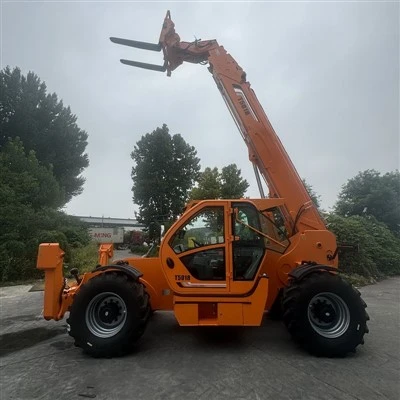
First, let’s set a baseline. A Backhon Loader isn’t a disposable power tool—this is a heavy-duty, built-for-use piece of equipment designed to move material, whether that’s aggregate, feedstock, or bulk goods. On average, with proper care, a unit should hit the 15,000 to 20,000 operational hour mark before it starts to show meaningful wear. Translating that to calendar years? If you’re running it 8 hours a day, 5 days a week, that’s roughly 7 to 10 years. But if you’re a construction site running it 24/7 during peak season? That number can shrink to 5 or 6. If it’s only for occasional farm use, maybe it creeps past 12 or 15. That’s the core, but there’s way more that impacts this timeline.
Let’s talk about the big ones: how you run it. Backhon Loaders are built to handle specific loads, but guys love to push them. Overloading is the #1 killer of these units. I’ve seen customers try to cram 20% more material into the bucket than the rated capacity “just this once” and end up bent lift arms, strained hydraulics, and a cracked frame within a year. It’s not just brute force, either—riding the brakes too hard, making sharp turns with a full bucket, or slamming the bucket into a pile instead of lowering it gently all add up. One of my regular clients runs a fleet of Backhon Loaders at a gravel pit; they’ve got one unit that’s pushed to its limit every day, and it’s already at 12,000 hours with major engine overhauls every 2 years. Another client uses theirs for loading hay on a small family farm—they rarely run it over 4 hours a day, and their unit’s at 18,000 hours and still going strong. That contrast right there tells you everything.
Next up: maintenance. This is the difference between a loader that hits 20k hours and one that craps out at 10k. I see it every week. Some customers change the engine oil every 50 hours, replace hydraulic filters on schedule, grease all the pivot points like clockwork, and keep an eye on fluid levels. Their loaders roll for years with minimal issues. Others? They forget to grease the bucket pins until they’re squeaking so loud you can hear it from the next yard. They wait until the oil light comes on before changing the oil, and let hydraulic filters clog until the system sputters. Those guys end up with blown seals, seized bearings, and engine damage that costs more than a used loader after a few years. I had a customer last year who skipped maintenance for 18 months; his Backhon Loader’s hydraulic system failed mid-shift, and the repair bill was $12k. If he’d stuck to the schedule, that same repair would have cost $1,500 total over the same period. So maintenance isn’t just “keeping it running”—it directly extends the lifespan by a ton.
Environmental factors matter too. Where do you run this thing? If it’s a dusty mine site in the Arizona desert, dust is going to get into every nook and cranny. It coats the air filter, clogs the radiator, and works its way into the hydraulic system, wearing down parts way faster. We’ve seen loaders in desert climates lose 30% of their projected lifespan because of unfiltered dust. If it’s a construction site in the Pacific Northwest, constant moisture and mud can cause rust on the frame and electrical components, leading to corrosion that weakens metal over time. Even cold climates? The freeze-thaw cycle can break seals, strain the hydraulics when they’re cold, and make the engine work harder to start. We tested a few units in northern Canada last year; a loader running there had to have its hydraulic lines replaced every 3 years, compared to every 5 years for units in milder areas. Extreme environments add stress that no maintenance schedule can fully fix.
Then there’s upgrades and repairs. A lot of people think a loader’s lifespan is fixed, but that’s not true. If you catch small issues early, you can replace parts before they turn into big problems. We’ve had customers who swapped out worn bucket edges at 8k hours instead of grinding them down until they damaged the bucket itself. Or replaced a faulty sensor on the hydraulic system that was causing uneven pressure, which prevented a major leak. Some guys even upgrade components over time: adding a better air filtration system for dusty sites, or a reinforced bucket for heavy loads. These changes don’t just fix issues—they extend the lifespan. I know one customer who’s had his Backhon Loader for 14 years. He’s replaced the engine once, the hydraulic pump twice, and done regular frame repairs, and that loader is still running 12 hours a day on his demolition site. That’s way past the average timeline, all because he stayed on top of repairs and upgrades.
Wait, let’s clear up a common myth: a lot of people think once a loader hits its “lifespan” it’s useless. No way. We’ve seen loaders that are 20+ years old, running at 15k hours, still doing light work on farms or small landscaping jobs. The “end of lifespan” is more like the point where the cost of repairs starts to outweigh the value of the loader. If a 10-year-old loader needs $8k in repairs, but it’s only worth $5k on the used market, that’s when it makes sense to replace it. But if you’re using it for a job that doesn’t require top-tier performance, you can keep it going way longer. That’s a key point I see missed in a lot of industry articles—lifespan isn’t just about how long it physically works, it’s about how cost-effective it is to keep running.
As a supplier, I also want to be honest about the unit itself. Not all Backhon Loaders are built the same. We use high-grade steel for frames, heavy-duty hydraulic cylinders, and engines that are rated for industrial use. Cheaper models, or units that are built for light commercial use instead of heavy industrial, will have shorter lifespans. I’ve seen off-brand loaders that only last 5 years even with perfect care, because their parts are thinner, their hydraulics are lower quality, and they can’t handle consistent heavy loads. That’s why it matters to pick a loader that’s matched to your job. If you’re loading 1-ton buckets of rock every day, a light-duty model isn’t going to cut it, and it’ll die way before it should. So choosing the right loader for your needs is the first step to getting the longest possible lifespan.
Let’s put this all in perspective with real numbers, not just averages. A well-cared-for Backhon Loader, used for moderate, light to heavy workloads in a mild climate, with regular maintenance and matched to the job? You’re looking at 8 to 12 years, or 18k to 22k hours. A loader that’s pushed hard, in a harsh environment, with spotty maintenance? 4 to 6 years, or 7k to 10k hours. A loader that’s retired but kept well in storage? It might sit for 15 years, but once you start running it, it’ll only last a few more years if you don’t refurbish it first. I’ve seen a customer pull a 10-year-old Backhon Loader out of a barn last year, fixed a couple of seals, and it works great for moving firewood on his property. That’s a whole other scenario—storage matters, too. If you leave a loader outside in the rain, rust will kill it way faster than if you store it in a covered space when it’s not in use.
Now, let’s talk about what this means for you, if you’re in the market. If you’re trying to decide whether to buy new or used, the lifespan is a big factor. A used loader with 10k hours, well maintained, is probably still got 5 to 7 years left in it, if you don’t mind a bit of wear. A new loader will last 10+ years, but it’s a bigger upfront cost. It’s a trade-off: upfront cost vs. long-term maintenance and repair costs. That’s why we always tell customers to look at the total cost of ownership, not just the sticker price. A $50k new loader might cost you $10k in repairs over 10 years, while a $30k used loader might cost $15k in repairs over 6 years. Which is better? Depends on your budget and how long you plan to keep it.
I get a lot of questions about extending a loader’s lifespan, so let’s wrap up with the easy, actionable stuff. First, follow the maintenance schedule in the manual—no shortcuts. Second, don’t overload it, and use the right attachment for the job. Third, store it properly, keep it clean, and don’t let it sit idle for months without starting it up. Fourth, fix small issues as soon as you see them—don’t wait until a tiny leak turns into a $5k repair. If you do all that, you’ll easily get the maximum lifespan out of your Backhon Loader, no matter what industry you’re in.
At the end of the day, there’s no one-size-fits-all answer. But if you’re running a Backhon Loader, and you want it to last as long as possible, you need to treat it right. If you’re looking for a reliable loader that’s built to handle tough jobs, or you have questions about what model fits your needs, feel free to reach out for a chat. We don’t do hard sales pitches—just straight talk about what works for your operation.
Wheel Excavator References
- National Agricultural Statistics Service (NASS). 2021. "Industrial Equipment Lifespan and Maintenance Guidelines." U.S. Department of Agriculture.
- Heavy Equipment Manufacturers Association (HEMA). 2022. "Backhoe Loader Performance and Durability Report."
- Journal of Construction Equipment and Technology. 2020. "Factors Affecting Heavy Machinery Operational Lifespan in Mining and Construction."
- Backhon Technical Manual Series. 2019. "Preventive Maintenance and Extended Operation Protocols for Backhon Loaders."
- Industrial Maintenance and Plant Operations Magazine. 2021. "Cost-Benefit Analysis of Heavy Machinery Repair vs. Replacement."
Shandong Feisite Machinery Co., Ltd.
As one of the most professional backhon loader manufacturers and suppliers in China, we’re featured by quality products and good service. Please rest assured to buy cheap backhon loader made in China here and get quotation from our factory. Customized orders are welcome.
Address: 100 meters south of Zengfusi Village, Mihe Town, Qingzhou City, Shandong Province
E-mail: Wpeng19911103@qq.com
WebSite: https://www.shandongfeisite.com/
