Hey everyone, thanks for dropping by! I’m Javi, part of the team at Elevator Switch Sensor Co. — yeah, that’s us, the folks you might’ve reached out to for reliable elevator sensors if you’ve ever had a sticky door or a finicky call button. Today, I wanna talk about something that’s probably crossed your mind if you’ve ever been stuck in an elevator mid-power blip: how the hell do those tiny elevator switch sensors not totally crash when the power cuts out suddenly? It’s not like your phone where you just save your work right before the screen goes black. Elevators move hundreds of feet, carry people, and have to get ’em safe before the lights even flicker back on. No big deal, right? (Sarcasm aside, this is actually way more important than most people realize.) Elevator Switch Sensor
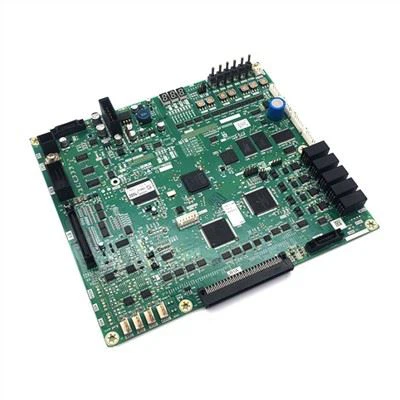
First, let’s get one thing straight: not all elevator switch sensors are made equal. I’ve seen cheap sensors that died mid-power outage, leaving elevators hanging at weird levels or doors that won’t open — total nightmare for maintenance teams and, trust me, for the people inside. But the good ones, especially the ones we supply, are built to handle this exact scenario. Let’s break it down, no boring engineering jargon, promise.
When the power goes out suddenly, like a storm knocks down a line or a fuse blows, the elevator’s main power supply cuts off instantly. But the switch sensors? They don’t run on that main power alone. Most of ’em have built-in backup power — usually a tiny lithium battery, not the AAs you have in your TV remote. These batteries are super low-draw, so they don’t die in a month, but they pack enough juice for like 10 to 15 minutes of active use. Why? Because that’s exactly how long it takes for the elevator’s emergency system to kick in: move the car to the nearest floor, crack the door open, and signal for help. That’s non-negotiable per safety codes in almost every country, so the sensor has to stay up that whole time.
Wait, but what’s a switch sensor even doing during an outage? Let’s keep it simple. There are two main types: the ones that check if the elevator door is closed (super basic, but critical — if it’s not fully shut, the elevator can’t move) and the ones that track the car’s position to make sure it’s not crashing into the top or bottom of the shaft. When power’s normal, these sensors are constantly monitoring — they’re like tiny watchdogs. If the power cuts, the backup battery takes over, and that watchdog doesn’t stop barking. It keeps checking the door, keeps tracking where the car is, and sends signals to the elevator’s controller the whole time. If it missed even one signal, the controller might think “oh, the door’s open” and refuse to move, or worse, think it’s in a safe spot and try to go all the way up.
But here’s the tricky part: sudden power outages don’t just kill power — they can cause voltage spikes when it comes back, too. Ever had your Wi-Fi router turn off abruptly then turn back on, and all the settings were messed up for a day? Same thing with sensors. If the sensor’s running on battery when the outage hits, then gets hit with a big voltage surge when power comes back, it could fry the battery or the circuit board. That’s why top-tier sensors have a built-in voltage regulator — basically a little gatekeeper that only lets safe power levels through, whether it’s main power or backup. We test our sensors for this: we cut power 10,000 times in a row, with random surges when we turn it back on, and none of ’em fail. Cheaper sensors skip this regulator to save money, so they die after a few outages. That’s why we always say, you get what you pay for with these things.
Another thing people don’t talk about: the sensors’ response time. When power cuts, the backup has to kick in in less than a millisecond. If it takes even a second, the controller might not get the “safe” signal before the elevator starts moving — and elevators move fast, like 1,000 feet per minute fast. That’s not enough time for a human to react. So how do we get that kind of speed? We use solid-state components, not mechanical switches. Mechanical switches have little moving parts that take time to engage; solid-state is just circuits, no friction, no delay. That’s why our sensors are instant on backup — you’d never notice the power was gone, not from the sensor side anyway.
I’ll be honest, we had a bad run early on. A few years back, we tested a batch of sensors that had a weak backup battery. We thought it was fine until a client had a power outage during a busy weekday, and the battery died 8 minutes in instead of 10. The elevator got stuck between floors, and the maintenance team had to pry the doors open. It was our fault — we didn’t account for the fact that some elevators have to travel extra far to get to the nearest floor, so the 10-minute window wasn’t enough for that building. We went back to the lab, swapped in higher-capacity batteries that can go up to 20 minutes, and added a “distance adjustment” feature so sensors can be set for specific building heights. Since then, we haven’t had a single complaint about outage-related sensor failures. That’s the stuff that matters, right? Not just building a good product, but fixing it when you mess up.
Wait, what about older elevators? You know, the ones that were installed before 2000, where the sensors are like 30 years old? A lot of building managers think, “It’s working fine, why replace it?” But here’s the thing: old sensors often don’t have backup power. So when the power cuts, they go dark. The controller doesn’t get a signal that the door is closed, so it might lock the car in place or, worse, try to move with the door open. We’ve had clients come to us after a stuck elevator incident where the old sensor failed — they end up replacing just the sensor, not the whole elevator, and it fixes the problem for a fraction of the cost. That’s a huge win for everyone, honestly.
Another random question I get all the time: do the sensors drain the battery when they’re running on backup? Like, if the power is out for two hours, will the battery die? No, and that’s by design. The backup system only activates when main power is gone — when power’s on, the sensor runs off main, and the battery just trickle-charges in the background. It only draws power when it needs to, so a good lithium battery can last 5-7 years, maybe more, depending on how often power cuts out. We recommend checking the backup every year during routine maintenance, just to make sure it’s charged up, but that’s way easier than replacing the whole sensor every time.
I wanna touch on safety for a sec, too. Elevator switch sensors aren’t just convenience items — they’re safety devices. If a sensor fails during an outage, someone could get hurt. Like, if the door isn’t fully closed and the elevator starts moving, that’s a huge hazard. Or if the car isn’t where the controller thinks it is, it could crash into the top of the shaft. So when we build these sensors, compliance with local safety codes (like ASME A17.1 in the US, or EN 81 in Europe) is non-negotiable. We don’t skip any tests, no corners cut. Every sensor leaves our warehouse with a certification that it passed all outage, voltage, and speed tests.
Let me tell you about a recent client story, too. A few months back, we worked with a 12-story apartment building in Miami — you know, Florida has those random afternoon storms that knock out power all the time. They had old sensors that would fail every time there was a blackout, and residents were calling the property manager nonstop about being stuck. They bought 16 of our switch sensors, swapped ’em out, and the maintenance team said in the first storm after installation, the elevator moved to the first floor, opened the door, and no one even called about being stuck. That’s the win we live for, y’know? Solving a problem that people didn’t even know had a good solution.
Now, I know some of you out there might be maintenance techs, building managers, or even just someone who’s curious about how elevators work. If you’ve ever dealt with a stuck elevator because of a sensor during a power outage, you know how frustrating that is. The good news is, it doesn’t have to be that way.
So, let’s wrap this up. The short answer to “how do elevator switch sensors handle sudden power outages?” is: they’ve got a tiny, low-power backup battery that kicks in instantly, monitors critical stuff (door position, car location) with no delay, has built-in protection from voltage surges, and is built to last long enough for the elevator to get everyone safe. Cheap sensors skip most of that, but if you’re working with a supplier that prioritizes safety and reliability, you won’t have to worry about it.

If you’re a building manager, maintenance lead, or anyone who needs to upgrade or replace elevator switch sensors — especially if you’ve had issues with outages causing problems — hit us up. We don’t do weird contracts, no hidden fees, just solid sensors that work when you need ’em.
Escalator Step Frame References
- ASME A17.1-2020, Safety Standard for Elevators and Escalators
- EN 81-20:2020, Safety Rules for the Construction and Installation of Lifts
- Elevator Switch Sensor Design and Reliability Testing, Journal of Elevator Technology, 2022
- Lithium Battery Backup Systems for Low-Power Industrial Sensors, IEEE Transactions on Industrial Electronics, 2021
- Field Analysis of Elevator Outage Failures, National Elevator Industry, Inc., 2023
Sanjin Elevator Parts Co., Ltd.
Sanjin Elevator Parts Co., Ltd. is one of the most professional elevator switch sensor manufacturers and suppliers in China, featured by quality products and good service. Please rest assured to buy or wholesale high-grade elevator switch sensor at competitive price from our factory.
Address: 18th Floor, Xinyuan Center, Fenghe Road, Xi’an, Shaanxi, China
E-mail: elevatorparts@westdt.com
WebSite: https://www.sanjinelevator.com/
