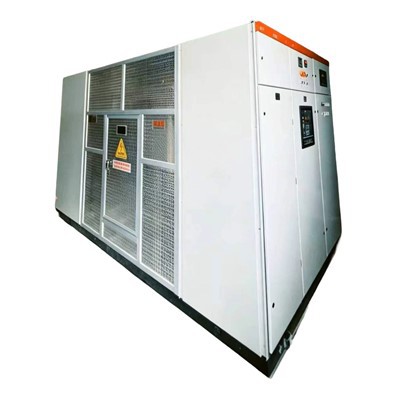
As a seasoned provider in the high voltage switchgear industry, I’ve witnessed firsthand the critical role these systems play in modern power distribution networks. High voltage switchgear is an essential component in the electrical infrastructure, ensuring the safe and efficient operation of power systems. In this blog, I’ll delve into the main components of high voltage switchgear, discussing their functions, importance, and how they work together to form a reliable system. High Voltage Switchgear
Circuit Breakers
Circuit breakers are the heart of high voltage switchgear. Their primary function is to interrupt the flow of electricity in the event of a fault, such as a short – circuit or overload. This is crucial for protecting the electrical equipment and preventing damage to the power grid.
There are several types of circuit breakers used in high voltage switchgear. Oil circuit breakers were once widely used, but due to environmental and safety concerns, they are being phased out. Vacuum circuit breakers are popular for medium – voltage applications. They use a vacuum as the arc – quenching medium, which offers fast operation, low maintenance, and high reliability. For high – voltage applications, sulfur hexafluoride (SF6) circuit breakers are commonly used. SF6 gas has excellent insulating and arc – quenching properties, allowing for compact and efficient circuit breaker designs.
When a fault occurs, the protective relays detect the abnormal current or voltage and send a signal to the circuit breaker. The circuit breaker then opens its contacts, interrupting the current flow. The arc that forms between the contacts must be quenched quickly to prevent damage to the breaker and the rest of the system. The arc – quenching medium in different types of circuit breakers (vacuum, SF6, etc.) plays a vital role in this process.
Isolators
Isolators, also known as disconnectors, are used to isolate a part of the electrical system from the live circuit. They are typically open – air devices that are operated manually or by a motor – drive mechanism. Unlike circuit breakers, isolators are not designed to interrupt load current or fault current. Their main purpose is to provide a visible break in the circuit for maintenance and safety reasons.
Before any maintenance work is carried out on the high voltage switchgear, the isolators are opened to ensure that the section being worked on is completely de – energized. This creates a safe working environment for the maintenance personnel. Isolators are designed to be able to withstand the rated voltage and current of the system when closed, and to provide reliable insulation when open.
Current Transformers (CTs) and Voltage Transformers (VTs)
Current transformers and voltage transformers are essential for measuring and protecting the electrical system. CTs are used to measure the current flowing in a circuit, while VTs are used to measure the voltage.
CTs step down the high current in the primary circuit to a lower, measurable current in the secondary circuit. This allows the use of standard measuring instruments and protective relays, which are designed to operate at lower current levels. The secondary current is proportional to the primary current, and the ratio between the two is determined by the turns ratio of the CT.
VTs, on the other hand, step down the high voltage in the primary circuit to a lower voltage in the secondary circuit. Similar to CTs, the secondary voltage is proportional to the primary voltage, and the turns ratio of the VT determines this relationship. The measured current and voltage values are used by protective relays to detect faults and by metering devices to measure the power consumption.
Protective Relays
Protective relays are the intelligent components of high voltage switchgear. They continuously monitor the electrical parameters of the system, such as current, voltage, and power. When a fault is detected, the protective relays send a trip signal to the circuit breaker, causing it to open and isolate the faulty section of the system.
There are different types of protective relays, each designed to detect specific types of faults. Over – current relays, for example, are used to detect excessive current in the circuit, which can be caused by a short – circuit or overload. Under – voltage relays monitor the voltage level and can be used to protect equipment from damage due to low voltage. Differential relays compare the current entering and leaving a section of the circuit to detect internal faults.
Modern protective relays are often microprocessor – based, which offers advanced features such as self – diagnosis, communication capabilities, and the ability to store fault data. These relays can be programmed to meet the specific requirements of different electrical systems.
Enclosures
The enclosures of high voltage switchgear serve multiple purposes. They provide mechanical protection for the internal components, protecting them from physical damage and environmental factors such as dust, moisture, and insects. Enclosures also play a crucial role in ensuring the safety of personnel. They are designed to prevent accidental contact with live parts, and they are often made of materials with high electrical insulation properties.
There are different types of enclosures, ranging from simple open – frame designs for small – scale applications to fully enclosed, gas – insulated switchgear (GIS) for large – scale and high – voltage applications. GIS enclosures use SF6 gas as an insulating medium, which allows for a compact and highly reliable design. The enclosures are also designed to meet specific safety standards and requirements, such as IP (Ingress Protection) ratings.
Busbars
Busbars are the conductors that carry the electrical current within the high voltage switchgear. They are usually made of copper or aluminum due to their high electrical conductivity. Busbars are designed to handle the rated current of the system without excessive heating.
The layout of busbars is an important consideration in the design of high voltage switchgear. They can be arranged in different configurations, such as single – bus, double – bus, or ring – bus systems. The choice of busbar configuration depends on the specific requirements of the electrical system, such as the need for redundancy, flexibility, and ease of maintenance.
Control and Auxiliary Circuits
Control and auxiliary circuits are used to operate and monitor the high voltage switchgear. The control circuits are responsible for sending signals to the circuit breakers, isolators, and other components to open or close them. They also provide status indications, such as whether a circuit breaker is open or closed.
Auxiliary circuits include power supplies for the protective relays, control motors, and other auxiliary devices. These circuits are designed to ensure the reliable operation of the switchgear under different conditions. For example, they may include battery – backed power supplies to provide power in the event of a main power failure.
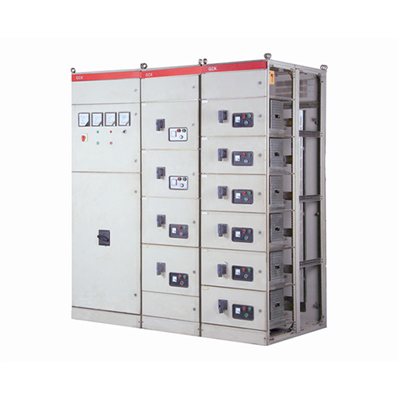
All these components work in harmony to form a high voltage switchgear system. The proper selection, installation, and maintenance of these components are crucial for the reliable and safe operation of the electrical power system.
Low Voltage Switchgear If you’re in the market for high voltage switchgear or need more information about our products and services, I encourage you to reach out for a procurement discussion. Our team of experts is ready to assist you in finding the best solutions for your specific needs.
References
- "Electrical Power Systems Technology" by Mark Nelms
- "High – Voltage Switchgear and Substation Automation" by various industry experts in relevant electrical engineering publications.
Anhui Xinchen Electrical Equipment Co., Ltd.
We are one of the most reliable high voltage switchgear manufacturers and suppliers in China, specialized in providing high quality customized products. We warmly welcome you to buy bulk high voltage switchgear for sale here from our factory. Contact us for quotation.
Address: No. 8, Waihuan South Road, Economic and Technical Development Zone, Ningguo City, Xuancheng City, Anhui Province
E-mail: xinchen0316@126.com
WebSite: https://www.cn-xinchen.com/
