Hey there, folks! I’m a supplier of flat twisted cables, and today I wanna chat about one super important question: What is the maximum operating temperature of a flat twisted cable? Flat Twisted Cable
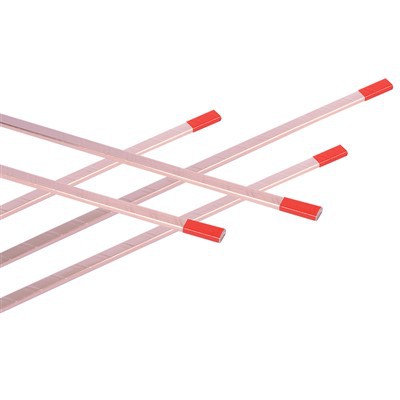
First off, let me give you a bit of background. Flat twisted cables are pretty cool. They’re used in all sorts of applications, from consumer electronics like laptops and tablets to industrial machinery and automotive systems. Their flat design makes them easy to install in tight spaces, and the twisting helps reduce electromagnetic interference. But when it comes to temperature, things can get a bit tricky.
The maximum operating temperature of a flat twisted cable isn’t a one – size – fits – all number. It depends on a bunch of factors, and I’ll break them down for you.
Cable Materials
The materials used to make the cable play a huge role. The conductor, usually made of copper or aluminum, has its own temperature limits. Copper is a great conductor of electricity, but it starts to lose its conductivity as the temperature rises. Most standard copper conductors can handle temperatures up to around 75°C to 90°C continuously. If you go beyond that, the resistance of the copper increases, which can lead to more power loss and heat generation.
The insulation material is also crucial. There are different types of insulation, such as PVC (Polyvinyl Chloride), Teflon (PTFE – Polytetrafluoroethylene), and XLPE (Cross – linked Polyethylene). PVC is a common and cost – effective option. It’s usually rated for a maximum operating temperature of about 70°C. If you expose a PVC – insulated flat twisted cable to temperatures higher than that for a long time, the insulation can start to degrade. It might become brittle, crack, or even melt, which is a major safety hazard.
On the other hand, Teflon is a high – performance insulation material. It can withstand much higher temperatures, often up to 200°C or even more. That’s why you’ll see Teflon – insulated cables in applications where high heat is a given, like in some aerospace or high – end industrial equipment. XLPE also offers good temperature resistance, typically up to 90°C or 105°C, and it has better mechanical properties compared to PVC.
Application Environment
The environment where the cable is used matters a lot. If the cable is installed in a well – ventilated area, it can dissipate heat more easily, and the maximum operating temperature might be closer to the rated value of the materials. But if it’s in a confined space with poor air circulation, like inside a sealed electrical enclosure, heat builds up much faster.
For example, in a data center server rack, there are a whole bunch of cables packed together. The heat generated by the servers and the cables themselves can create a very hot environment. In such cases, you need to be extra careful about the cable’s temperature rating. You might even need to use cables with higher temperature ratings or install additional cooling systems to keep the cables within a safe operating temperature.
In industrial settings, like in a manufacturing plant, there could be other heat sources nearby, such as furnaces or hot machinery. The cable might be exposed to radiant heat, which can also push up its temperature. So, when choosing a flat twisted cable for these applications, you gotta take into account the overall heat load in the area.
Current Load
How much current is flowing through the cable is another key factor. The more current you pass through a cable, the more heat it generates. This is because of the resistance of the conductor. When current flows through a resistor (in this case, the cable conductor), power is dissipated as heat according to the formula (P = I^{2}R) (where (P) is power, (I) is current, and (R) is resistance).
Suppose you have a flat twisted cable with a certain cross – sectional area. If you try to run a very high current through it, the heat generated can quickly exceed the cable’s maximum operating temperature. That’s why you need to size the cable properly for the expected current load. If you’re not sure, it’s always a good idea to consult an electrical engineer.
How to Determine the Right Maximum Temperature
As a flat twisted cable supplier, I get this question all the time from my customers. The first thing I do is ask them about their application. I need to know things like where the cable will be installed, what kind of current it will carry, and what kind of other heat sources are around.
Based on that information, I can recommend the right type of cable. If they need a cable for a low – current, room – temperature application, a PVC – insulated cable might be just fine. But if it’s a high – temperature, high – current scenario, Teflon or XLPE – insulated cables would be a better choice.
It’s also important to do some testing. You can use temperature sensors to monitor the temperature of the cable during operation. This way, you can make sure it’s staying within a safe range. If you notice that the cable is getting too hot, you might need to adjust the current load, improve the ventilation, or switch to a cable with a higher temperature rating.
Why It Matters
Getting the maximum operating temperature right is not just about keeping the cable working. It’s also a matter of safety. If a cable overheats, it can cause a fire. In industrial or commercial settings, a fire can lead to huge losses, including damage to equipment, loss of production, and even harm to people.
In consumer electronics, an overheating cable can damage the device it’s connected to. For example, if the cable in your laptop charger overheats, it could fry the battery or other components in the laptop.
So, as a cable supplier, I always stress the importance of choosing the right cable for the job. It might cost a bit more upfront to get a cable with a higher temperature rating, but it can save you a lot of headaches in the long run.
Let’s Chat!
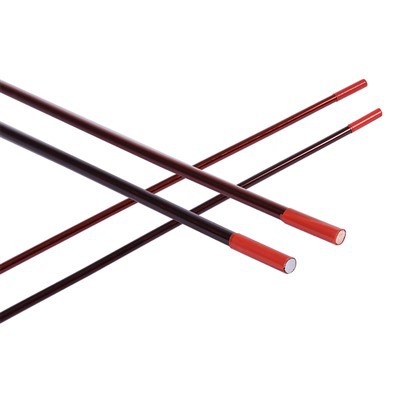
Enameled Round Wire If you’re in the market for flat twisted cables and you’re not sure what maximum operating temperature you need, don’t hesitate to reach out. I’ve got years of experience in this industry, and I’m more than happy to help you figure out the best cable for your application. Whether you need a cable for a small DIY project or a large – scale industrial installation, I can provide you with high – quality cables that meet your requirements. Just drop me a line, and we can start the conversation.
References
- Grob, Bernard. Introduction to Electronics. McGraw – Hill Education.
- Neaman, David A. Electronic Circuit Analysis and Design. McGraw – Hill Education.
- Electrical Engineering Handbook, edited by Richard C. Dorf. CRC Press.
Tianjin Jingwei Power Technology Co., Ltd.
As one of the most professional flat twisted cable manufacturers and suppliers in China, we’re featured by quality products and good service. Please rest assured to buy durable flat twisted cable made in China here from our factory. Contact us for more details.
Address: No.1 Chuangxin Rd. Xiaozhan Industrial Park, Jinnan District, Tianjin, China
E-mail: info@jwdc.cn
WebSite: https://www.jw-dcs.com/
