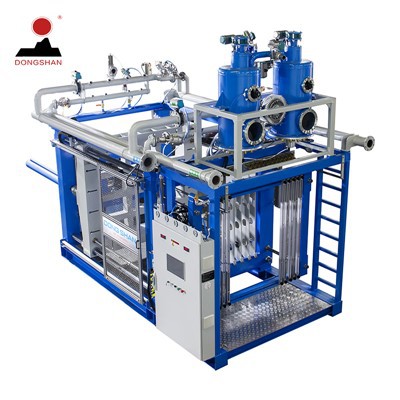
As a supplier of EPP (Expanded Polypropylene) Shape Molding Machines, I often receive inquiries from customers about the maximum temperature these machines can reach. Understanding this parameter is crucial for ensuring the efficient and high – quality production of EPP products. In this blog post, I will delve into the factors affecting the maximum temperature of an EPP Shape Molding Machine, the typical temperature range, and the significance of this temperature in the manufacturing process. EPP Shape Molding Machine
Factors Affecting the Maximum Temperature
1. Machine Design and Construction
The design of an EPP Shape Molding Machine plays a vital role in determining its maximum temperature. The heating elements, insulation materials, and overall structure of the machine all contribute to its temperature – handling capabilities. High – quality heating elements, such as advanced electric heaters or steam – based heating systems, can provide more stable and efficient heat transfer. Insulation materials, on the other hand, help to minimize heat loss, allowing the machine to maintain a higher temperature.
For example, machines with better – insulated chambers can reduce the amount of heat that escapes to the surrounding environment. This means that less energy is wasted, and the machine can reach and maintain a higher temperature more easily. Additionally, the construction of the machine, including the thickness and quality of the chamber walls, can also impact its ability to withstand high temperatures.
2. Material Compatibility
The type of EPP material used in the molding process also affects the maximum temperature. Different grades of EPP have different melting points and thermal stability. Manufacturers need to select the appropriate EPP material based on the desired properties of the final product and the capabilities of the molding machine.
If the machine is set to a temperature that is too high for the EPP material, it can lead to over – melting, which may result in poor – quality products with issues such as deformation, uneven density, or surface defects. Conversely, if the temperature is too low, the EPP material may not fully expand, leading to incomplete molding.
3. Safety Considerations
Safety is a top priority in the operation of any industrial machine, including EPP Shape Molding Machines. The maximum temperature of the machine is often limited by safety factors. Exceeding the safe temperature limit can pose risks such as fire hazards, damage to the machine components, and potential harm to the operators.
Manufacturers typically design their machines with built – in safety mechanisms, such as temperature sensors and over – temperature protection devices. These devices monitor the temperature of the machine and automatically shut it down if the temperature exceeds a pre – set limit. This ensures the safety of the production process and protects the investment in the machine.
Typical Temperature Range
The maximum temperature that an EPP Shape Molding Machine can reach typically ranges from 150°C to 250°C. However, this range can vary depending on the specific model and design of the machine.
1. Lower End of the Range (150°C – 180°C)
At the lower end of the temperature range, the EPP material starts to expand gradually. This temperature is suitable for some applications where a lower level of expansion is required, or for materials that are more sensitive to high temperatures. For example, when molding thin – walled EPP products or using EPP materials with a relatively low melting point, a temperature in this range can be sufficient to achieve the desired shape and density.
2. Middle Range (180°C – 220°C)
The middle range of temperatures is commonly used in most EPP molding processes. At these temperatures, the EPP material expands more rapidly and uniformly, resulting in products with better mechanical properties and a more consistent density. This range is suitable for a wide variety of EPP products, including packaging materials, automotive parts, and consumer goods.
3. Higher End of the Range (220°C – 250°C)
The higher end of the temperature range is used for applications that require a high degree of expansion and a more rigid structure. Some EPP materials can withstand these higher temperatures without significant degradation, allowing for the production of products with greater strength and durability. However, operating the machine at these temperatures requires careful monitoring and control to ensure the safety of the process and the quality of the products.
Significance of the Maximum Temperature in the Manufacturing Process
1. Product Quality
The maximum temperature of the EPP Shape Molding Machine directly affects the quality of the final products. By controlling the temperature accurately, manufacturers can ensure that the EPP material expands to the desired degree, resulting in products with consistent density, shape, and mechanical properties.
For example, in the production of automotive parts, such as bumpers and interior components, precise temperature control is essential to meet the strict quality standards. If the temperature is too low, the parts may not have the required strength and impact resistance. If the temperature is too high, the parts may be over – expanded, leading to dimensional inaccuracies and reduced quality.
2. Production Efficiency
The ability to reach and maintain the appropriate maximum temperature is also crucial for production efficiency. A machine that can heat up quickly and maintain a stable temperature can reduce the cycle time of the molding process, increasing the overall production output.
In addition, by optimizing the temperature settings, manufacturers can minimize the amount of scrap and rework, further improving the efficiency of the production process. This not only saves time and resources but also reduces the cost of production.
3. Energy Consumption
The maximum temperature of the machine is closely related to its energy consumption. Higher temperatures generally require more energy to maintain, so it is important to find the optimal temperature for each specific application. By using energy – efficient heating systems and insulation materials, manufacturers can reduce the energy consumption of the machine while still achieving the desired production results.
Conclusion
In conclusion, the maximum temperature that an EPP Shape Molding Machine can reach is influenced by various factors, including machine design, material compatibility, and safety considerations. The typical temperature range for these machines is between 150°C and 250°C, with different ranges suitable for different applications.
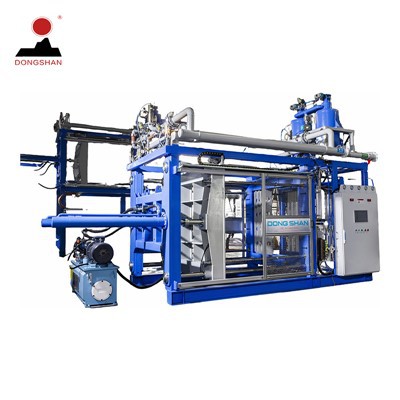
Understanding the maximum temperature and its significance in the manufacturing process is essential for producing high – quality EPP products efficiently and safely. As a supplier of EPP Shape Molding Machines, we are committed to providing our customers with machines that offer precise temperature control and reliable performance.
Vacuum System If you are interested in purchasing an EPP Shape Molding Machine or have any questions about our products, please feel free to contact us. We are more than happy to discuss your specific requirements and provide you with the best solutions for your EPP molding needs.
References
- ASTM International. Standard test methods for expanded cellular plastics – polyolefins. ASTM D3575 – 19.
- Handbook of Polymer Foams and Technology. Edited by D. Klempner and K. C. Frisch. Hanser Publishers, 1991.
- Research papers on EPP molding technology from industry – related journals such as the Journal of Cellular Plastics.
Hangzhou Fuyang Dongshan Plastic Machinery Co., Ltd.
Hangzhou Fuyang Dongshan Plastic Machinery Co., Ltd. is one of the most professional EPP molding machine manufacturers and suppliers in China, featured by quality products and low price. Please feel free to wholesale advanced EPP molding machine made in China here and get quotation from our factory. Customized orders are welcome.
Address: 101 Guanting, Baiqian Villige, Luzhu Town, Fuyang District, Hangzhou City, Zhejiang Province, China
E-mail: xu@dong-shan.cn
WebSite: https://www.epseppmachinery.com/
