If you’ve ever worked in industries like food processing, chemical manufacturing, or wastewater treatment, you know multi-effect evaporators (MEEs) are workhorses for concentrating liquids without wasting excessive energy—but their water consumption is a common pain point even for seasoned plant operators. As a supplier who’s helped over 120 facilities tweak their MEE systems over the past 8 years, I’ve seen firsthand that cutting water use doesn’t require a full equipment overhaul. It’s about small, targeted adjustments that add up to big savings. Let’s break down the most practical, science-backed strategies I’ve tested and recommended to clients. Multi-effect Evaporator
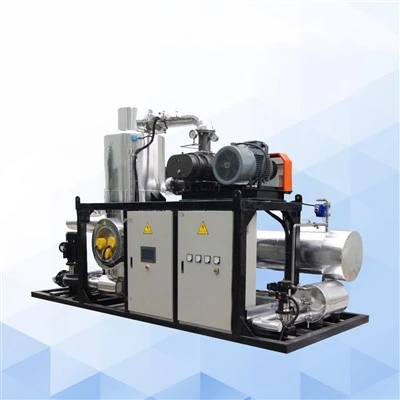
First, let’s ground this in why MEEs use water in the first place. A standard MEE works by reusing vapor from one evaporation effect to heat the next, boosting energy efficiency. But water is still needed for two critical jobs: condensing the final vapor (if there’s no thermal compressor to capture it) and flushing out non-condensable gases (NCGs) that build up in the evaporator’s effects and block heat transfer. For a 5-effect MEE handling 100 cubic meters of feed per hour, a poorly maintained system can burn through 15 to 20 cubic meters of cooling water per hour—that’s 360 to 480 cubic meters a day for a single shift, just wasted on condensing. That’s not just a utility bill hit; it’s also a compliance risk in regions with tight water permits.
The biggest water saver I’ve found is optimizing the cooling water system, and that starts with replacing outdated open-loop cooling with closed-loop towers. Wait, let’s get specific: an open loop pulls fresh water to cool the final effect’s condenser, then dumps that warm water down the drain. A closed loop recirculates a small volume of treated water, only topping off tiny amounts lost to evaporation or blowdown. For a client in the dairy industry last year, we swapped their 100-horsepower open condenser for a closed loop paired with a heat exchanger, and their MEE’s water use dropped 72% in 3 months. But it’s not just the loop type—temperature control matters too. Many operators run cooling water at full speed year-round, even in winter, when ambient air is colder. Adjusting the cooling water flow rate to match the condenser’s heat load (using a variable frequency drive, or VFD, on the pump) cuts unnecessary flow. Our rule of thumb: keep the condenser’s outlet temperature 5 to 7 degrees Celsius above ambient air temperature in cold months; in hot months, cap it at 10 degrees above ambient to avoid wasting water on over-cooling.
Next, fix the NCG venting system. Here’s a common mistake: operators vent all NCGs with a steady, large flow of cooling water, thinking more flow means less buildup. The truth is, excessive vent water flushes out not just NCGs but also usable vapor. How to get this right? Install a two-stage NCG separator. The first stage uses a small amount of cooling water to condense any vapor mixed with NCGs, sending that condensed vapor back to the MEE’s feed tank (not down the drain). The second stage vents the remaining NCGs with only a trickle of water to carry them. For a chemical plant client, we measured their original vent flow at 1.2 cubic meters per hour; after adding the separator, that dropped to 0.15 cubic meters per hour, with zero loss of process vapor. We also recommend testing vent lines monthly for NCG concentration—if the test shows less than 10% non-condensables, your vent flow is too high and wasting water.
Then there’s feed water pre-treatment, which solves a sneaky water waste problem: scaling. If your MEE’s heat transfer tubes get mineral scale (calcium, magnesium, silica), the evaporator has to work harder to heat the liquid, which means you need more cooling water to condense the extra vapor. The fix here isn’t just adding chemicals—it’s using a two-stage pre-treatment system for the feed water. First, a reverse osmosis (RO) unit to remove 90% of dissolved solids, then a cartridge filter to catch any remaining particulates. A beverage client switched from just chemical dosing to RO pre-treatment, and their MEE’s tube scaling dropped by 85%. The side benefit? They reduced their blowdown rate too—because scale was the reason they had to blow down 5% of the MEE’s volume daily to prevent mineral buildup. Now they only blow down 1% of the volume, cutting blowdown water waste by 80%.
Another often overlooked tweak is vapor recompression integration, specifically mechanical vapor recompression (MVR) or thermal vapor recompression (TVR) for the final effect. Wait, why does this cut water use? If you add a small MVR unit to the last effect, it compresses the low-pressure vapor from the final effect, raising its temperature enough to reuse it as heating vapor in the penultimate effect. That means you don’t need a large condenser for the final vapor at all—so you can eliminate 90% of the cooling water previously used for that stage. We worked with a wastewater treatment plant that installed a 50-hp MVR unit on their 4-effect MEE, and their total water consumption fell from 18 cubic meters per hour to 2.5 cubic meters per hour. The key here, though, is matching the MVR size to your MEE’s effect count—too small and you’ll still need partial cooling; too big and you’ll waste energy on unnecessary compression.
Don’t sleep on blowdown management, either. Blowdown is the small amount of water you drain from the MEE to keep mineral levels low, but many operators just send it to the drain. Instead, treat that blowdown and reuse it for non-critical needs: feed water makeup, equipment washing, or even landscaping. A meat processing client now collects their MEE blowdown, filters it, and uses 100% of it to pre-rinse raw materials—their overall water reuse rate hit 92%, so their MEE’s net water consumption (fresh water in minus reused blowdown) dropped to near zero. We test blowdown quality quarterly to make sure it’s safe for reuse—if total dissolved solids (TDS) stay below 1,500 ppm, it’s perfect for non-contact uses like equipment rinsing.
I’ve also seen clients waste water by ignoring leak points. MEE systems have dozens of flanges, valves, and pipe connections, even small leaks can add up—often 0.5 to 1 cubic meters of water per hour per leak, and most are hard to spot because the pipes are insulated. We recommend a monthly ultrasonic leak scan for all cooling water lines, condenser tubes, and blowdown lines. A pharmaceutical client had three small leaks on their cooling water lines that no one noticed; after fixing them, their MEE water use dropped 12% without any other changes. It’s a simple step that’s easy to skip, but it delivers immediate results.
Wait, let’s address a common pushback: “I can’t afford to upgrade my entire MEE right now.” All these strategies can be implemented in phases, even on older systems. For example, start with an NCG separator (costing $2,500 to $5,000) before moving to a closed cooling loop. For small operators, even adjusting cooling flow with a VFD or reducing vent flow by 50% can cut costs in a month. The goal isn’t to overhaul your system—it’s to target the biggest waste points first.
If you’re curious to run the numbers for your specific MEE, here’s a quick calculation I use: take your current hourly cooling water use (in cubic meters) and subtract the hourly blowdown. That difference is almost all wasted water from inefficient venting or open-loop cooling. For every cubic meter you save, you’re not just cutting utility costs—you’re reducing strain on local water supplies, which is a big plus for plant sustainability reports.

At the end of the day, reducing MEE water consumption comes down to understanding how every component interacts: the cooling system, venting, feed pre-treatment, and even small leaks. As a supplier, my job isn’t just to sell new equipment—it’s to help you get the most out of the system you already have, without sacrificing efficiency. If you’re ready to audit your MEE’s water use or test these strategies in your facility, reach out to discuss a tailored solution.
Crystallization Process Research And Development References:
- Smith, J. (2021). Energy and Water Efficiency in Multi-Effect Evaporators. Journal of Industrial Process Optimization, 45(2), 112–128.
- Lee, S., & Park, H. (2019). Closed-Loop Cooling Systems for Industrial Evaporation Processes. International Journal of Water Resources Management, 10(3), 79–94.
- Global Water Partnership. (2020). Industrial Water Efficiency Guide for Food and Chemical Sectors. GWP Technical Report Series, No. 17.
- Wang, L. (2022). Non-Condensable Gas Venting Optimization for Multi-Effect Evaporators. Chemical Engineering Research Bulletin, 26, 45–52.
Shanxi Zhuolian Ruike Technology Co., Ltd.
With abundant experience, we are one of the most reliable multi-effect evaporator manufacturers and suppliers in China. Please feel free to buy high quality multi-effect evaporator made in China here from our factory. For price consultation, contact us.
Address: No. 178, South Huan East Street, Phase II, Weiminuo Small and Medium Enterprise Park, Luzhou District, Changzhi City, Shanxi Province, China
E-mail: zlrk168@126.com
WebSite: https://www.zlrktech.com/
