If you’re running a powder coating operation, the curing oven isn’t just a box you toss parts into—it’s the single biggest factor that turns raw powder into a durable, finish that holds up to scratches, chemicals, and weather. I talk to shop owners every week who get stuck here: they bought a random oven online because it was cheap, and now they’re fighting powder that’s under-cured (chips after 6 months) or over-cured (yellowing on aluminum parts). The #1 question I get? “What size powder coating curing oven do I actually need?” Powder Coating Curing Oven
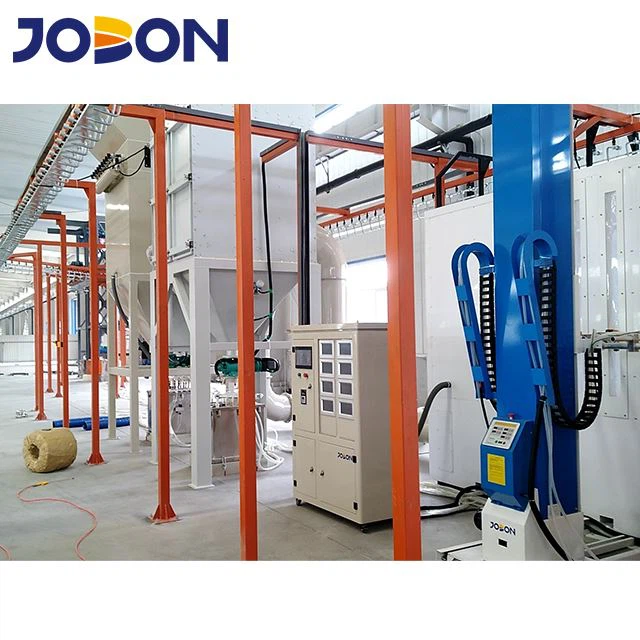
Let’s cut the fluff: this isn’t about grabbing the biggest oven you can find. It’s about matching the oven to your parts, your throughput, and your workflow. I’ve been supplying these ovens for 12 years, so I’ve seen the wins and the disasters. Here’s how to figure it out without wasting money on something too big or too small.
First, let’s start with the non-negotiable basics that most people skip. You can’t pick a size until you measure what you’re coating. I don’t care how fast your production is right now—you need to write down three numbers for every part you run, even if you think you’ll never change it: length, width, and height. Don’t just measure the part itself—account for hanging hardware. That rack hook or wire hanger adds 2-3 inches to each side, and if you forget that, the part won’t fit through the oven door.
I had a customer last year who coated fence panels for a local builder. His parts were 72 inches long, and he measured the fence, not the hook. When his $8k oven showed up, the door was 78 inches wide, but the hook stuck out 4 inches on each side. He had to grind the hooks off every time, which cost him 2 hours a day and ruined the parts. Fix that first, and you’ll skip half the headaches.
Next, let’s talk throughput—how many parts you’re actually coating in a day. This is where a lot of people go wrong. If you’re a small shop doing 100 small bike frames a day, you don’t need a 10-foot oven. But if you’re running 50 lawnmower decks or 20 steel tables, you need space to keep the line moving. Let’s break this down by oven type, because that changes everything. Powder coating ovens fall into three main categories, and size works differently for each: batch, conveyor, and walk-in.
Batch ovens are the most common for small to mid-sized shops. They’re like a big closet you load up, close the door, run the cure cycle, then unload. The size here is all about internal volume. For example, if your loaded rack is 4 feet long, 3 feet wide, and 2 feet tall, you don’t need an oven that’s exactly that size. You need 12-18 inches of extra space on all sides. Why? Air circulation. Powder curing needs consistent heat across every part. If you stack a bike frame right up against the oven wall, that area gets 50°F hotter, and the front of the part gets too cool. Extra space lets the heated air flow around every part, so no spots are under-cured. I always tell batch oven buyers: add 2 feet to length, 1.5 feet to width, and 1 foot to height to your loaded rack dimensions. That’s your minimum internal oven size.
Conveyor ovens are for shops that run non-stop, 5+ hours a day. These are linear ovens where parts hang from a chain that moves through the oven. Size here isn’t just about internal space—it’s about conveyor speed and oven length. Let’s do the math: your cure time is usually 10-20 minutes at 350-400°F. If your conveyor moves parts at 10 feet per minute, you need an oven that’s at least 100 feet long. That’s the sweet spot for most conveyor setups. If you make it too short, parts don’t get enough time at temp, and you get cure failures. If you make it too long, you’re wasting energy on empty space. Width matters too: if your parts are 2 feet wide, your conveyor oven should be 3 feet wide max. Any wider, and the air won’t reach the middle parts. I see conveyor oven buyers go 4 feet wide because they “might coat big parts someday” and end up with uneven curing. Stick to 1 foot extra on each side of your widest part, that’s enough.
Walk-in ovens are for big operations coating oversized parts—like farm equipment frames, dump truck beds, or steel structural beams. Size here is driven by the largest part you’ll ever run. A lot of farmers will come to me and say, “I’ll only coat tractor parts that are 12 feet long, so I need a 12-foot oven.” But a few months later, they take on a contract for 16-foot steel beams. Suddenly, their oven is too small. If you’re doing walk-in, add 2 feet to length and width for future jobs. Height is trickier: most walk-in ovens are 8-10 feet tall, but if you’re lifting heavy parts (200+ pounds), you need extra headroom for your hoist. 12 feet is a safe bet if you don’t want to redesign your lift later.
Now, let’s get to the hidden factors that mess up size calculations, because these are the ones that no one tells you about. First, heat load. Every metal part absorbs heat differently. Aluminum is thinner, so it heats up faster. Steel is thicker, so it needs more time. If you’re coating steel parts, you need a slightly larger oven than if you’re coating aluminum—because thick parts need more airflow to bring them up to temp. I had a customer who coated aluminum bike parts in a 4x4x6 batch oven, then switched to steel motorcycle frames. They kept the same oven, and 30% of the frames came out under-cured. Adding 1 foot to the oven length fixed that.
Second, insulation. A lot of cheap ovens use 2-inch insulation, but good ones use 4-inch. If your oven has thin insulation, you’ll lose heat through the walls, so you need a slightly larger interior to maintain your cure temp. If you buy a well-insulated oven, you can go smaller. That’s why I always tell people to stop looking at price and look at insulation thickness first. A $5k oven with 4-inch insulation will work better than a $3k oven with 2-inch, and you won’t have to make it bigger.
Third, future growth. This is the part I wish more shop owners thought about. If you’re a small shop now doing 50 parts a day, in 2 years you could be doing 150. If you buy a 4x4x6 oven now, in 2 years you’ll outgrow it and have to spend another $10k on a bigger one. I recommend sizing for 2 years out, not right now. Let’s say you’re currently coating 3 bike racks a batch, and you’re adding another powder gun in 6 months. Go with a 5x5x7 oven—you’ll fit 5 racks later, and you won’t have to upgrade.
Wait, let’s bust a common myth: more space = more production. No. If you load a batch oven too full, parts touch each other and get cold spots. If you have too much empty space, you’re wasting energy. I once had a customer with a 10x10x20 batch oven who was only coating small lawn mower decks. He ran 2 decks at a time, and his gas bill was $1,200 a month. When we swapped him to a 5x5x8 oven, his gas bill dropped to $450, and his cure quality went up because air circulated better. So it’s a balance.
Let’s do a quick example to make this concrete. Suppose you run a small custom shop, coating steel door knobs, bike parts, and lawn mower housings. Your average loaded rack is 3 feet long, 2 feet wide, 1.5 feet tall. Throughput is 200 parts a day, most of which fit on 1 rack. That means you can get away with a 4x4x6 batch oven. Add 1 foot on each side for airflow, that’s exactly the size you need. If you start adding larger parts, like 4-foot fence gates, bump it to a 5x5x8 oven.
If you’re a mid-sized shop running steel furniture and playground equipment, 10 hours a day, 5 days a week. Your parts are 5 feet long, 3 feet wide. Your conveyor runs at 10 feet a minute, cure time is 15 minutes. So oven length is 150 feet (10×15), width is 4 feet (3 + 0.5 each side). That’s your conveyor size. Don’t go 120 feet, you’ll cut cure time too short. Don’t go 180 feet, you’re wasting energy.
If you’re a large operation coating farm equipment and steel beams, your biggest part is 14 feet long, 4 feet wide, 5 feet tall. Add 2 feet to length and width, 1 foot to height. That gives you a 16x6x6 walk-in oven. If you know you’ll do 18-foot beams in the next year, make it 20x6x6.
Now, let’s talk about what happens when you get the size wrong, because that’s the worst part. Too small, and you can’t keep up with orders. I had a customer who turned down a $20k job because his oven was too small to fit the parts. Too big, and high utility bills, uneven cure, wasted space. I’ve seen shops lose $5k a year on a too-big oven just in gas and electricity.
The good news? You don’t have to guess. The right way to pick size is to take your current max part, add airflow space, account for heat type, and plan 2 years ahead. If you’re still not sure, send over your part dimensions and throughput, and we can walk through it. No sales pitch, no pressure—just the facts that I’ve learned from 12 years working with shop owners who’ve made every size mistake there is.

At the end of the day, the perfect oven size isn’t the biggest or the cheapest—it’s the one that lets you coat every part right, keep up with orders, and not blow your budget on energy. Stop settling for an oven that doesn’t fit your needs. If you’re ready to stop fighting cure issues and size headaches, reach out and let’s chat about what works for you.
Powder Coating Reciprocator References:
- Powder Coating Magazine. (2021). “Curing Oven Sizing Guidelines for Industrial Powder Coating Operations.”
- National Association of Surface Finishing. (2022). “Best Practices for Powder Curing Oven Design and Sizing.”
- Industrial Heating Magazine. (2020). “Heat Load Calculations for Batch and Conveyor Curing Ovens.”
Qingdao Jobon Science&Tech Development Co., Ltd.
Qingdao Jobon Science&Tech Development Co., Ltd. is one of the leading powder coating curing oven manufacturers and suppliers in China. We warmly welcome you to buy high-grade powder coating curing oven for sale here from our factory. All our products are with high quality and competitive price.
Address: 48, YANGZHOU ROAD, LAIXI EDZ, QINGDAO, CHINA
E-mail: Info@joboncoating.com
WebSite: https://www.joboncoating.com/
