If you’ve ever worked in high-precision machining, automotive component manufacturing, or aerospace part production, chances are you’ve heard the term “PCD die insert” tossed around—maybe as a solution for dull tooling, inconsistent part finishes, or costly production delays. But if you’re new to the space, this piece will break down exactly what a PCD die insert is, why it’s non-negotiable for modern manufacturing, and how as a supplier focused on quality and performance, we’ve built our business around delivering inserts that solve real workshop headaches. PCD Dies
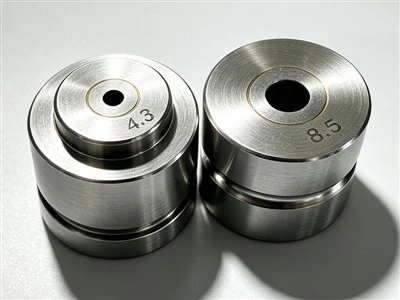
First, let’s start with the basics: PCD stands for Polycrystalline Diamond. Unlike natural diamond, which is mined and limited in size, shape, and cost, PCD is engineered by compressing tiny synthetic diamond particles at extremely high pressure and temperature, then binding them together with a metal catalyst (like cobalt) to form a solid, ultra-hard composite. A PCD die insert is a small, precision-cut segment of this PCD composite, shaped to fit into a tool holder or die body, and designed specifically to cut, shape, or form materials that would wear out standard carbide or steel tooling in a fraction of the time.
Wait, let’s clarify the two most common use cases for PCD die inserts because that’s where a lot of people get confused. First, there are cutting die inserts: these are for turning, milling, or boring operations where the insert’s sharp, diamond edge cuts through non-ferrous metals, composites, graphite, and even hardened plastics with zero built-up edge (BUE) or tool wear. Second, there are extrusion or drawing die inserts: these are for shaping raw material (like aluminum wire, plastic tubing, or copper bar) by forcing it through a precision hole in the insert, a process that demands uniform hardness and surface finish to ensure consistent output. Either way, the core value of a PCD die insert is its unmatched hardness—rated at 9000 HV, compared to just 1800 HV for solid carbide, which means it can last 10 to 100 times longer than standard tooling in the same application.
But it’s not just hardness that makes PCD die inserts special. Let’s talk about their micro-structure, which is where the engineering magic happens. Each diamond particle in a PCD insert is only a few microns wide, so when the insert is shaped, ground, or polished, it has a fine, consistent grain structure. That translates to two huge benefits for manufacturers: a mirror-like surface finish on the finished part, and resistance to chipping. Natural diamond, by contrast, has large, irregular crystal structures that can crack or leave a rough edge when subjected to high-speed cutting, which is why PCD is the go-to for parts that need both speed and precision.
Now, as a PCD die insert supplier, we’ve seen first-hand how many companies overlook the nuances of PCD, leading to wasted money and downtime. For example, a few years back, we worked with a small automotive parts shop that was using carbide inserts to machine aluminum alloy engine pistons. Their inserts needed replacing every 200 parts, leading to $12,000 a month in tooling costs and 8 hours of downtime per week just for changes. We supplied them with custom PCD die inserts sized specifically for their lathe, and not only did their tooling costs drop to $1,800 a month, but they were able to produce 500 extra pistons a month without adding overtime. That’s the kind of tangible, bottom-line impact that PCD inserts deliver, but only when you get the right insert for the right job.
That’s why a huge part of what we do as a supplier is not just selling inserts, but helping customers match their application to the right PCD grade and insert geometry. Not all PCD is the same: there are grades with larger diamond particles for heavy-duty cutting (like roughing aluminum billets) and finer grain grades for finishing operations, where surface finish is critical. There are also “bonded” PCD inserts, where the diamond layer is brazed to a carbide or steel base, which adds rigidity and reduces cost compared to solid PCD inserts. For extrusion die applications, we offer precision-ground PCD inserts with concentricity tolerances of less than 0.001mm, which is non-negotiable for companies making medical tubing or electrical wire, where even a 0.002mm variation can ruin a batch.
Another common mistake we see: people trying to use PCD die inserts for ferrous materials, like steel or iron. The cobalt binder in PCD reacts chemically with iron at high cutting temperatures, leading to rapid wear and insert failure. PCD is only for non-ferrous materials: aluminum, copper, brass, magnesium, graphite, carbon fiber reinforced plastics (CFRP), glass-filled polymers, and even hard rubber. For steel, solid carbide or cubic boron nitride (CBN) inserts are the right choice, and we also supply those as part of our full tooling line, so customers don’t have to guess which insert to use.
Now, let’s talk about why PCD die inserts have become so ubiquitous in the last 20 years. The rise of electric vehicles (EVs) is a huge driver here. EV powertrains rely heavily on aluminum components—motor housings, battery cooling plates, power inverter parts—that need to be machined to near-perfect flatness and surface finish to reduce weight and improve efficiency. Traditional tooling can’t keep up with the volume or precision demands of EV production lines, which run 24/7. PCD inserts, with their long tool life and consistent performance, are the backbone of high-volume EV component manufacturing. We recently supplied inserts to an EV production plant that runs 3 shifts a day; their PCD inserts last 6 months, compared to carbide inserts that needed changing every 10 days. That’s not just a cost savings—it’s eliminating 144 hours of downtime a month, which for a plant making 10,000 motors a month, is enough to produce an extra 2,000 units annually.
Aerospace is another big sector for PCD die inserts. Aircraft components like turbine blades, wing spars, and satellite parts are often made from CFRP, which is abrasive enough to wear out carbide inserts in 50 parts. PCD inserts cut CFRP cleanly, with no delamination or fraying of the carbon fibers, which is critical for structural integrity. We also supply PCD extrusion dies for aerospace aluminum tubing, which needs to be perfectly round and defect-free to fit together with tight tolerances during assembly.
But PCD die inserts aren’t just for large manufacturing facilities. Small job shops, which specialize in custom parts, benefit too. A job shop I worked with last year was making custom aluminum brackets for a drone company; their old carbide inserts would wear out after 5 brackets, so they were spending more on tooling than on raw material. With our custom PCD inserts, they now make 80 brackets before needing a change, and their customers are willing to pay a 15% premium for the consistent, high-quality finish. That’s the kind of small win that adds up for small businesses looking to compete with larger facilities.
Now, let’s address a question we get all the time: “Are PCD inserts worth the upfront cost?” It’s true that a PCD insert can cost 5 to 10 times more than a carbide insert, but when you factor in tool change time, downtime, part scrap rates, and production volume, the math almost always works in PCD’s favor. For low-volume jobs, carbide might be fine, but for any production run over 50 parts, or any application where precision and speed matter, PCD is the smarter investment. We’ve seen customers come to us after wasting months on carbide tooling, and the switch to PCD has cut their production costs by 60-80% in many cases.
As a PCD die insert supplier, our job doesn’t end when the insert leaves our warehouse. We offer custom grinding and polishing services, so if a customer has a unique die or tool holder shape, we can tailor an insert to fit, no matter how specific the requirements are. We also provide test inserts—small, low-cost samples that let customers test performance in their own workshop before committing to a bulk order. That’s something many big suppliers don’t offer, and it’s built our reputation as a partner, not just a vendor.
If you’re a manufacturer dealing with high-wear tooling, inconsistent part finishes, or the pressure to increase production without adding costs, a PCD die insert is likely the solution you’ve been looking for. Whether you’re machining aluminum engine parts, extruding medical tubing, cutting CFRP aircraft components, or producing precision electrical wire, the right PCD insert can transform your production line, cut costs, and improve part quality.
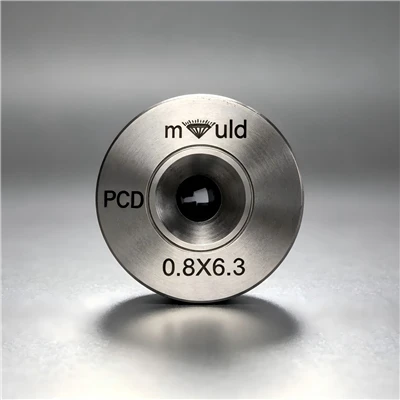
We work with shops large and small across industries, and every day we help customers find the right PCD die insert for their unique application. If you’re tired of tooling that doesn’t keep up with your demands, or you want to calculate the potential cost savings of switching to PCD, reach out to our team to discuss your needs. We can share case studies, test inserts, and work with you to design a solution that fits your budget and production goals.
Carbide Pressure Drawing Die Reference
- "Polycrystalline Diamond (PCD) Tooling Fundamentals," Manufacturing Engineering Society International, 2021.
- "PCD Die Inserts: Application and Performance in Non-Ferrous Machining," Journal of Materials Processing Technology, Vol. 287, 2020.
- "Tooling Selection for High-Volume Electric Vehicle Component Machining," SAE International Journal of Materials and Manufacturing, Vol. 14, No. 3, 2021.
Hejian Strains Of Hard Alloy Mould Co., Ltd.
As one of the most professional pcd dies manufacturers and suppliers in China, we’re featured by quality products and good service. Please rest assured to wholesale durable pcd dies made in China here from our factory. Also, custom service is available.
Address: Tangzhuang Industrial Park, Hejian City, Hebei Province
E-mail: limei@mouldzy.com
WebSite: https://www.mouldzy.com/
