If you’ve ever stood in our lab watching our atomic physics instruments do their thing—like count single atoms and get data that feels straight out of a sci-fi movie—you might’ve wondered: how the hell do we actually detect one tiny atom, when even a speck of dust is billions of times bigger? I get it. This stuff sounds like magic, but it’s all clever engineering and physics, no wand required. And as someone who’s been selling these tools (and tweaking them in-house) for over a decade, I’m gonna break it down like I would to a new tech intern—no stuffy jargon, just the real, messy, cool process. Atomic Physics Instruments
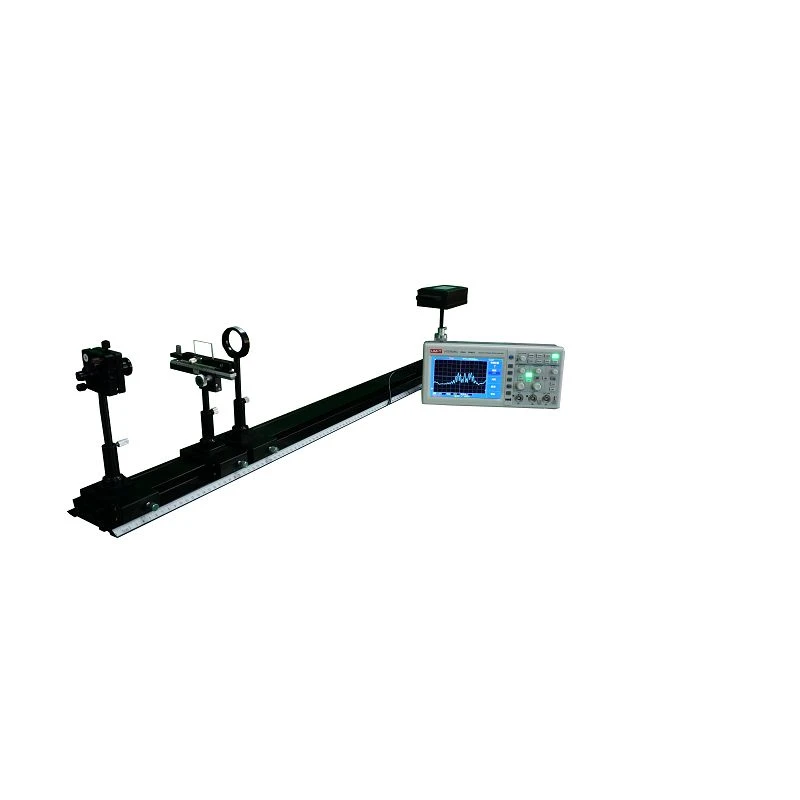
First, let’s get one thing straight: individual atoms are ridiculous small. A single hydrogen atom is like 0.1 nanometers across. That’s 1 ten-billionth of a meter. If you shrank a basketball down to the size of an atom, the Earth would be about as big as that basketball. So trying to “see” one feels like trying to catch a firefly in a hurricane with a pair of chopsticks. The earliest atomic detectors were clunky, inaccurate, and could barely pick up clusters of atoms, let alone single ones. But over the last 40 years, we’ve nailed two main methods that work like a charm—and these are the ones our instruments use every day.
The first, and most common, is laser spectroscopy, specifically something called resonant laser ionization (RLI). Here’s how it works, in plain terms: atoms are super picky about what light they absorb. Each element has a unique “fingerprint” of energy levels—like a barcode only it can scan. If you shine a laser tuned exactly to the frequency that matches one specific atom’s energy jump, that atom will soak up that photon of light. Then, when it calms back down, it emits a photon at the exact same frequency. That’s your signal. But wait—how do you make sure you’re only picking up one atom, not a whole bunch?
Let me walk you through a real test we do with our strontium atoms, for example. First, we shoot a cloud of gas into a tiny, ultra-high vacuum chamber (no air molecules allowed—they’d mess up the signal like static on a radio). The chamber is cooled to almost absolute zero, so the atoms slow way down and clump into a neat little group (cooling with lasers, by the way—another trick we use, but that’s a story for another blog). Then we turn on our first laser, tuned just right for strontium’s first energy jump. The atoms absorb that light, which “excites” their electrons. Then we hit ’em with a second, slightly higher-energy laser, tuned to the exact frequency that will knock that excited electron all the way off the atom, turning it into a positively charged ion. Now we have a charged particle, not a neutral atom.
That’s the key move. Instead of trying to catch a tiny neutral atom with a camera, we turn it into something we can easily detect with a detector that picks up electric charge. We have microchannel plates (MCPs) in our instruments, which are basically thousands of tiny electron multipliers. When one ion hits the MCP, it creates a tiny shower of electrons, which then hits another part of the MCP, creating more electrons, and so on—until you get a tiny, measurable blip on your screen. That blip isn’t some random noise. It’s one, single atom. I’ve watched this a hundred times in our lab: when we crank down the number of atoms in the chamber so there’s only one left, you get exactly one blip. No more, no less. It’s like a atomic doorbell—only rings when one atom shows up.
The second method we use, depending on what our customers need, is fluorescence imaging. This is the one that makes those cool, grainy (but super precise) photos of single atoms you see in research papers. It’s simpler, but only works for certain elements—like our rubidium or cesium atomic clocks, which use this method. Here’s how that goes: again, we put our atoms in an ultra-high vacuum, cool ’em way down, and trap ’em with laser beams (a setup called optical tweezers, basically lasers that act like tiny, invisible containers). Then we shine a laser tuned to that atom’s exact absorption frequency. The atom absorbs the laser light, its electrons jump up, and then they emit a photon when they fall back down. That emitted photon is what we detect with a super-sensitive camera—like an electron-multiplying CCD (EMCCD) camera, which can pick up a single photon, even in a sea of background light.
Wait, but how do we tell that’s one atom, not a stray photon from the laser or a random molecule hitting the camera? Easy: we time it. We turn the laser on for a tiny fraction of a second, and count how many photons hit the camera in that exact window. If we get one photon, that’s one atom. If we get ten, that’s ten atoms. If we get zero, there’s none there. It’s like having a camera that can count how many fireflies are in a jar by how many flashes it sees in a split second. This method is great because it lets us not just detect atoms, but also see where they are. We’ve had quantum computing customers use this to arrange single atoms in a grid, one by one, to make qubits—so that’s a big one for cutting-edge research.
Now, a lot of people ask: why do we need to detect single atoms, anyway? That’s fair. If you’re a material scientist testing a new semiconductor, you might need to know exactly how many dopant atoms are in a tiny spot—one too many could mess up the whole chip. If you’re a quantum physicist building a quantum computer, you need to know that each qubit (made of a single atom) is actually there, working correctly. If you’re an environmental scientist testing for radioactive contamination in soil, you need to count individual atoms of uranium or thorium to get an accurate reading—even a tiny sample could have a single radioactive atom, which is important for public health. Our instruments are used by all of these folks, and when they come to our lab to test a unit, they’re always blown away when we show them a live feed of a single atom’s blip on the screen.
Of course, it’s not all smooth sailing. There are tons of things that can mess up a good detection. Background noise from air molecules—even a tiny leak in the vacuum chamber can let in a few stray nitrogen molecules, which can absorb our laser light and create fake blips. That’s why we build our vacuum chambers with two layers of insulation and pressure sensors that alert us if there’s even a tiny leak. Then there’s “atom loss”—sometimes an atom will escape the trap before we can detect it, or it’ll stick to the wall of the chamber, so we have to adjust the laser frequencies or trap power to keep it in place long enough. And sometimes, two atoms will hit the MCP at almost the exact same time, creating a blip that looks like one big atom, not two. We fix that with timing resolution—our MCPs are calibrated to detect tiny differences in when the blips hit, so we can tell them apart 99.9% of the time.
I’ve been in this game long enough to see how far the tech has come. When I first started in this field 15 years ago, detecting a single atom would take minutes, and the error rate was around 10%. Now? Our instruments can detect a single atom in microseconds, with an error rate of less than 0.1%. That’s not just a upgrade—that’s a game-changer for our customers. A PhD student building a quantum computer used to have to wait hours to confirm their qubit was working; now they can do it in seconds. A material scientist testing a new battery material used to have to run multiple tests to get an accurate count; now they get it on the first try.
If you’re working in atomic physics, quantum computing, materials science, or environmental testing, and you’re tired of tools that are clunky, inaccurate, or too slow to keep up with your research, our atomic physics instruments are built for you. We’ve spent years refining our RLI and fluorescence detection systems, working closely with researchers to make sure our tools fit their exact needs—whether they’re counting single atoms in a semiconductor, building a trapped-ion quantum computer, or monitoring radioactive contamination in water. We don’t just sell boxes of parts; we deliver tools that actually work for the hard stuff, like detecting individual atoms when every other tool would miss them.
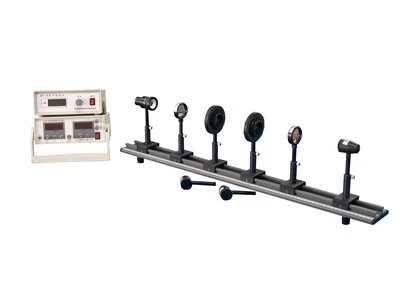
If you’re ready to stop guessing about your atom counts and start getting reliable, fast data, reach out to us to talk through your project. Whether you need a custom setup for a specific experiment, or a standard unit that’s already proven in labs around the world, we can help you find the right solution. We’re not just suppliers—we’re atomic physicists too, so we get exactly what you need for your research.
Mechanical instruments References:
- Foot, C. J. (2005). Atomic Physics. Oxford University Press.
- Metcalf, H. J., & van der Straten, P. (1999). Laser Cooling and Trapping. Springer.
- Kempen, E., et al. (2002). Atom Probe Tomography: A New Microscopy for Nanoscale Materials Analysis. Nature Materials.
- Grimm, R., et al. (2000). Optical Dipole Traps for Neutral Atoms. Advances In Atomic, Molecular, and Optical Physics.
Nanjing Longbow Scientific&Educational Instrument Co., Ltd.
As one of the most professional amo physics instruments manufacturers and suppliers in China, we’re featured by quality products and good service. Please rest assured to buy customized amo physics instruments from our factory. If you have any enquiry about pricelist, please feel free to email us.
Address: Room D, 22th floor, No.305, North Jiangdong Road, Nanjing,Jiangsu Province, China
E-mail: 79425380@qq.com
WebSite: https://www.lb-physics.com/
