Hey there! I’m a supplier of hydroxamic acid collectors, and I’ve been getting a lot of questions lately about how these collectors change the surface charge of minerals. So, I thought I’d take a moment to break it down and share what I’ve learned over the years in this business. Hydroxamic Acid Collectors
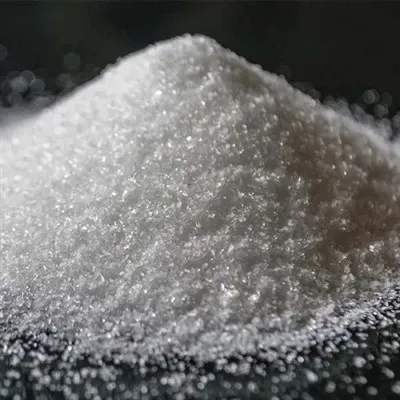
First off, let’s talk about what hydroxamic acid collectors are. Hydroxamic acid collectors are a type of chemical reagent used in the mining industry, especially in the flotation process. Flotation is a method used to separate valuable minerals from gangue (the unwanted material in an ore). These collectors are pretty special because they have a high selectivity for certain types of minerals, which means they can help us get a better yield of the good stuff.
Now, onto the main topic: how do these collectors change the surface charge of minerals? Well, it all comes down to the chemistry happening at the interface between the collector and the mineral surface.
Mineral surfaces have a natural surface charge. This charge can be positive, negative, or neutral, depending on the type of mineral and the conditions in the surrounding solution, like the pH level. For instance, some metal oxide minerals like hematite and ilmenite tend to have a positive surface charge in acidic solutions and a negative surface charge in alkaline solutions.
When we introduce hydroxamic acid collectors into the mix, they interact with the mineral surface in a few different ways. One of the key mechanisms is through chemical bonding. Hydroxamic acid molecules have a unique structure that allows them to form strong chemical bonds with metal ions on the mineral surface.
Let’s take a closer look at the structure of a hydroxamic acid molecule. It has a functional group called the hydroxamate group (-C(=O)NHOH). This group is the real star of the show when it comes to interacting with minerals. The oxygen and nitrogen atoms in the hydroxamate group have lone pairs of electrons that can form coordinate bonds with metal ions on the mineral surface.
When these coordinate bonds form, it’s like the hydroxamic acid collector is sticking to the mineral surface. This attachment can have a significant impact on the surface charge of the mineral.
For example, let’s say we’re dealing with a metal oxide mineral with a positive surface charge. When the hydroxamic acid collector bonds to the metal ions on the surface, it can donate some of its electron density to the metal ions. This donation of electrons can effectively reduce the positive surface charge of the mineral. In some cases, depending on the amount of collector adsorbed and the strength of the bonding, it can even reverse the surface charge to negative.
On the other hand, if the mineral has a negative surface charge, the interaction with the hydroxamic acid collector can be a bit more complex. The collector may still bond to the metal ions on the surface, but in some cases, it can also interact with the negatively charged sites through hydrogen bonding or other weaker intermolecular forces. These interactions can either reduce the negative surface charge or, if the collector has a positively charged species (due to protonation in acidic solutions), it can actually increase the surface charge and make it more positive.
Another factor that affects how hydroxamic acid collectors change the surface charge is the concentration of the collector in the solution. If we have a low concentration of the collector, only a small number of collector molecules will adsorb on the mineral surface. This may result in a relatively small change in the surface charge. However, as we increase the concentration of the collector, more and more molecules will attach to the surface, leading to a greater change in the surface charge.
The pH of the solution also plays a crucial role. The hydroxamic acid collectors can exist in different forms depending on the pH. At low pH values, the hydroxamic acid may be protonated, which can change its reactivity and the way it interacts with the mineral surface. At high pH values, it may be deprotonated, and this can also affect its bonding behavior.
Let’s think about a real – world scenario in a mine. When we’re designing a flotation process, we need to carefully control these factors. We want to optimize the amount of hydroxamic acid collector we use, the pH of the solution, and the other reagents in the system to ensure that the surface charge of the target minerals is changed in the right way. This way, we can get the best separation between the valuable minerals and the gangue.
For example, if we’re trying to separate hematite from quartz, we know that hematite has different surface charge properties compared to quartz. By using hydroxamic acid collectors and adjusting the process conditions, we can change the surface charge of hematite in a way that makes it more hydrophobic (repels water). This hydrophobic hematite particles will then attach to air bubbles in the flotation cell and rise to the surface, while the quartz particles, which remain hydrophilic (attract water), will stay in the pulp.
One of the great things about hydroxamic acid collectors is their versatility. They can be used with a wide range of minerals, including rare – earth minerals, titanium minerals, and some precious metal minerals. This is because their unique chemical structure allows them to form strong bonds with different types of metal ions.
As a supplier of hydroxamic acid collectors, I’ve seen firsthand the impact these collectors can have on the mining process. Mines that use our collectors often report higher recovery rates and better product quality. This is all thanks to the ability of these collectors to change the surface charge of minerals in a controlled and effective way.
If you’re in the mining industry and you’re looking to improve your flotation process, I’d highly recommend considering hydroxamic acid collectors. They can really make a difference in how you separate your valuable minerals from the waste. Whether you’re dealing with a small – scale operation or a large – scale mining plant, these collectors can be customized to meet your specific needs.
If you’re interested in learning more or want to discuss how our hydroxamic acid collectors can fit into your process, don’t hesitate to reach out. We have a team of experts who can work with you to find the best solution for your mining operation.
In conclusion, hydroxamic acid collectors are a powerful tool in the mining industry. Their ability to change the surface charge of minerals is based on their unique chemical structure and the way they interact with metal ions on the mineral surface. By carefully controlling the process conditions, we can use these collectors to optimize the flotation process and get better results. So, if you’re looking to take your mining operation to the next level, give us a shout, and let’s start talking about how we can work together.
Xanthate References
- Smith, J. (2018). "Advances in Flotation Reagents: Hydroxamic Acids". Mining Journal.
- Brown, A. and Green, B. (2019). "Surface Chemistry of Minerals and the Role of Hydroxamic Acid Collectors". Journal of Mineral Processing.
- White, C. (2020). "Optimizing Flotation Processes with Hydroxamic Acid Collectors". International Mining Review.
Bitop Bihope Qingdao Mining Co., Ltd
Bitop Bihope Qingdao Mining Co., Ltd. is one of the most professional hydroxamic acid manufacturers and suppliers in China, featured by quality products and low price. Please rest assured to buy discount hydroxamic acid in stock here and get quotation from our factory. Customized orders are welcome.
Address: Room 410, 4th Floor, Shengquan Business Building, No. 263 Yitong Road, Huangdao District, Qingdao City, Shandong Province, China
E-mail: btbhmining@163.com
WebSite: https://www.btbhmining.com/
