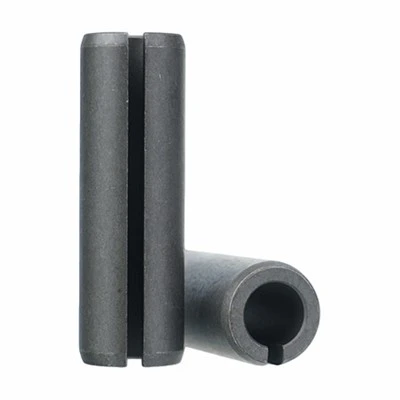
As a supplier of tooth spring pins, I often encounter inquiries from customers about various technical aspects of our products. One question that comes up quite frequently is: "What is the linear expansion coefficient of tooth spring pins?" In this blog post, I will delve into this topic, explaining what the linear expansion coefficient is, why it matters for tooth spring pins, and how it can impact the performance of these components. Tooth Spring Pins
Understanding the Linear Expansion Coefficient
The linear expansion coefficient, often denoted as α (alpha), is a measure of how much a material expands or contracts in response to a change in temperature. It is defined as the fractional change in length per degree change in temperature. Mathematically, it can be expressed as:
α = (ΔL / L₀) / ΔT
Where:
- ΔL is the change in length of the material
- L₀ is the original length of the material
- ΔT is the change in temperature
The linear expansion coefficient is typically expressed in units of per degree Celsius (°C⁻¹) or per degree Fahrenheit (°F⁻¹). Different materials have different linear expansion coefficients, which depend on their atomic structure and bonding characteristics.
Importance of the Linear Expansion Coefficient for Tooth Spring Pins
Tooth spring pins are widely used in various mechanical applications, such as automotive, aerospace, and industrial machinery. They are designed to provide a secure and reliable connection between two components by exerting a spring force. The performance of tooth spring pins can be significantly affected by temperature changes, and the linear expansion coefficient plays a crucial role in this regard.
1. Dimensional Stability
When the temperature changes, the tooth spring pins will expand or contract according to their linear expansion coefficient. If the expansion or contraction is not properly accounted for, it can lead to dimensional changes in the pins, which may affect their fit and function. For example, if the pins expand too much, they may become too tight and cause excessive stress on the mating components. On the other hand, if they contract too much, they may become loose and fail to provide a secure connection.
2. Spring Force
The spring force of tooth spring pins is directly related to their dimensions. As the pins expand or contract due to temperature changes, their spring force will also change. This can have a significant impact on the performance of the pins, especially in applications where a precise spring force is required. For example, in automotive engines, tooth spring pins are used to hold various components in place, and any change in the spring force can affect the engine’s performance and reliability.
3. Fatigue Life
Temperature changes can also affect the fatigue life of tooth spring pins. When the pins expand and contract repeatedly due to temperature cycling, they are subjected to cyclic stress, which can lead to fatigue failure over time. The linear expansion coefficient of the material used for the pins can influence the magnitude of the cyclic stress and, therefore, the fatigue life of the pins.
Factors Affecting the Linear Expansion Coefficient of Tooth Spring Pins
The linear expansion coefficient of tooth spring pins is primarily determined by the material used for their manufacture. Different materials have different linear expansion coefficients, and the choice of material can have a significant impact on the performance of the pins. Some of the factors that can affect the linear expansion coefficient of tooth spring pins include:
1. Material Composition
The chemical composition of the material used for the pins can have a significant impact on its linear expansion coefficient. For example, metals generally have higher linear expansion coefficients than ceramics. Within the metal group, different alloys can have different linear expansion coefficients depending on their composition. For example, stainless steel has a lower linear expansion coefficient than carbon steel.
2. Heat Treatment
Heat treatment can also affect the linear expansion coefficient of tooth spring pins. During heat treatment, the material undergoes a series of phase transformations, which can change its atomic structure and, therefore, its linear expansion coefficient. For example, quenching and tempering can increase the hardness and strength of the pins, but they can also affect their linear expansion coefficient.
3. Manufacturing Process
The manufacturing process used to produce the tooth spring pins can also have an impact on their linear expansion coefficient. For example, cold working can introduce residual stresses in the material, which can affect its linear expansion coefficient. Additionally, the precision of the manufacturing process can affect the dimensional accuracy of the pins, which can in turn affect their performance and the impact of temperature changes.
Measuring the Linear Expansion Coefficient of Tooth Spring Pins
Measuring the linear expansion coefficient of tooth spring pins requires specialized equipment and techniques. One common method is to use a dilatometer, which measures the change in length of a material as a function of temperature. The sample is heated or cooled at a controlled rate, and the change in length is measured using a sensitive displacement sensor. The linear expansion coefficient can then be calculated from the measured data using the formula mentioned earlier.
Another method is to use a thermal imaging camera to measure the temperature distribution on the surface of the pins. By analyzing the temperature distribution, it is possible to infer the change in length of the pins due to temperature changes and calculate the linear expansion coefficient.
Selecting the Right Material for Tooth Spring Pins Based on the Linear Expansion Coefficient
When selecting the material for tooth spring pins, it is important to consider the linear expansion coefficient in relation to the application requirements. If the pins are used in an environment with significant temperature variations, it is advisable to choose a material with a low linear expansion coefficient to minimize the dimensional changes and ensure the stability of the pins.
For example, in aerospace applications, where temperature variations can be extreme, materials such as titanium alloys are often used for tooth spring pins due to their low linear expansion coefficient and high strength-to-weight ratio. In automotive applications, stainless steel is a popular choice because of its corrosion resistance and relatively low linear expansion coefficient.
Conclusion
In conclusion, the linear expansion coefficient is an important property of tooth spring pins that can significantly affect their performance and reliability. As a supplier of tooth spring pins, we understand the importance of this property and take it into consideration when selecting the materials and manufacturing processes for our products. By providing high-quality tooth spring pins with appropriate linear expansion coefficients, we can ensure that our customers’ applications operate smoothly and efficiently.
Spring Pins If you are in need of tooth spring pins for your application, we would be happy to discuss your requirements and provide you with the best solutions. Our team of experts can help you select the right material and design the pins to meet your specific needs. Contact us today to start the conversation and explore how our tooth spring pins can enhance your products.
References
- Callister, W. D., & Rethwisch, D. G. (2010). Materials Science and Engineering: An Introduction. Wiley.
- Ashby, M. F., & Jones, D. R. H. (2005). Engineering Materials 1: An Introduction to Properties, Applications and Design. Butterworth-Heinemann.
- Shackelford, J. F. (2009). Introduction to Materials Science for Engineers. Pearson Prentice Hall.
Anhui Pins Metal Products Co., Ltd.
With abundant experience, we are one of the most professional spring pins manufacturers and suppliers in China. Please rest assured to buy high quality spring pins made in China here from our factory. For custom service and OEM&ODM service, contact us now.
Address: No. 381 Yangqiao Road, Quanjiao County, Chuzhou City, Anhui Province. Postal Code:239500
E-mail: info@chn-pins.com
WebSite: https://www.chn-pins.com/
